

Vol. 259 | 2025.12.02
| Category | Company | Article |
|---|---|---|
| Autonomous Driving | Waymo | Waymo Adds 3 New Cities to Its Roster. Everything to Know About the Robotaxi Service |
| ADAS | Zeekr | China’s Zeekr Is Giving Its Older EVs New Hardware. What About Tesla? |
| Autonomous Trucking | Rivian | Rivian teases game-changing autonomy ahead of AI Day |
| Autonomous Trucking | Isuzu | Isuzu to start public autonomous truck demo in Japan by Jan. 2026 |
| LiDAR Sensor | RoboSense | RoboSense Reports Strong Growth and Innovation in LiDAR Technology |

Waymo Adds 3 New Cities to Its Roster. Everything to Know About the Robotaxi Service
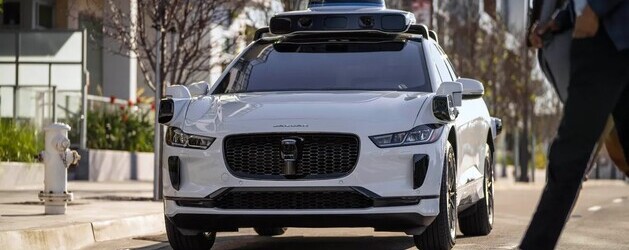
📌 Waymo is rapidly scaling its Waymo One robotaxi network across the US and internationally, pairing its sixth-generation Waymo Driver with strong safety data, new manufacturing capacity, and deep partnerships with OEMs and mobility platforms.
-
Waymo now offers fully driverless ride-hailing to the public in Phoenix, the San Francisco Bay Area, Los Angeles, Atlanta and Austin, with 24/7 coverage in several markets and recent freeway access added in Phoenix, SF and LA.
-
The company plans major US expansion by 2026, moving from manual or employee-only testing to public robotaxi service in cities including Las Vegas, San Diego, Detroit, Dallas, Houston, San Antonio, Miami, Orlando, Tampa, Denver, Seattle, Nashville, New Orleans, Minneapolis and Washington, DC.
-
In dense, highly regulated markets such as New York City and Philadelphia, Waymo is conducting supervised testing under local permits while lobbying for legal changes that would allow paid, fully driverless ride-hailing in the future.
-
Internationally, Waymo is entering Tokyo and London with manually driven test fleets operated by partners such as Nihon Kotsu, using these programs to adapt its technology to local roads and to secure permissions for fully autonomous service from 2026 onward.
-
Waymo is rolling out its sixth-generation Waymo Driver on new all-electric Zeekr RT robotaxis and, through a partnership with Hyundai, future Ioniq 5 SUVs, while continuing to operate and expand its Jaguar I-Pace fleet in existing markets.
-
To support fleet growth, the company is opening a 239,000-square-foot autonomous vehicle facility in the Phoenix area, aiming to add about 2,000 fully autonomous Jaguar I-Pace vehicles to its current ~1,500-vehicle fleet and to integrate sixth-generation hardware into new platforms.
-
Waymo reports over 100 million fully autonomous miles and more than 10 million paid rides, with its Safety Impact analysis showing large reductions in serious-injury crashes and collisions involving pedestrians, cyclists and motorcyclists compared with average human drivers in its operating cities.
-
The company is deepening ecosystem partnerships with Uber, Lyft, Avis, Moove and others for fleet operations, maintenance and app integration, while pausing near-term trucking expansion to focus investment on scaling its Waymo One robotaxi service, especially on freeways.

China’s Zeekr Is Giving Its Older EVs New Hardware. What About Tesla?

📌 Zeekr is launching a large-scale hardware retrofit program enabling more than 70,000 2024 EVs to upgrade to its Nvidia-based G-Pilot H7 ADAS system, highlighting a contrast with Tesla’s lack of a clear HW3-to-HW4 upgrade path.
-
Zeekr is offering ADAS hardware upgrades for over 70,000 2024-built Zeekr 001 and 009 vehicles, replacing ~60 components and requiring more than 20 labor hours per car.
-
The upgrade shifts Mobileye EyeQ5H–based systems to Zeekr’s in-house G-Pilot H7 architecture built on Nvidia Drive Thor-U, boosting compute from 48 TOPS to up to 700 TOPS.
-
Zeekr launched a crowdfunding-based rollout, requiring 3,000 contributors for the 001 program and 1,500 for the 009 program, with owner costs of roughly $1,900–$2,600 per vehicle.
-
The automaker invested about $28 million in early development and is absorbing part of the cost; hardware alone is valued at over $4,200 per vehicle.
-
Eligible first owners receive a $2,800 “ADAS Voucher” that can offset retrofit costs or be applied toward a new Zeekr equipped with G-Pilot H7.
-
The retrofit requires major disassembly, including replacement of the windshield, front bumper and cable harnesses, making it one of the most extensive ADAS hardware upgrades offered by a major OEM.
-
The initiative highlights the gap with Tesla, whose HW3-equipped vehicles still lack a confirmed upgrade path to HW4, despite prior assurances that retrofits would eventually be available.
-
Differences in connectors, cooling and module size complicate Tesla’s upgrade feasibility, while Zeekr’s program demonstrates that large-scale ADAS hardware retrofits are technically achievable with sufficient investment.

Rivian teases game-changing autonomy ahead of AI Day

📌 Rivian is preparing to unveil major upgrades to its autonomy stack at its Dec. 11 Autonomy & AI Day, signaling progress toward an “eyes-off,” multi-sensor autonomy system supported by improving LiDAR economics.
-
Rivian will host its Autonomy & AI Day on Dec. 11, where the company is expected to reveal advancements in its hands-free “eyes-off” driving system and broader autonomy roadmap.
-
The event will highlight the Rivian Autonomy Platform (RAP), including updates to its sensor suite, perception stack and plans for a “universal hands-free” capability.
-
CEO RJ Scaringe emphasized that LiDAR costs have dropped “dramatically,” reinforcing LiDAR as a beneficial sensor for higher-level autonomy within Rivian’s multi-sensor fusion strategy.
-
Rivian has not ruled out LiDAR integration in future models, positioning cameras, radar and potentially LiDAR as complementary inputs for training its AI-based perception system.
-
Shares rose roughly 8% over the past week following the announcement, with Rivian up more than 19% year-to-date.
-
The company continues to differentiate through premium electric trucks and SUVs, but faces a challenging EV market with cooling demand and tightened incentives.
-
Rivian reaffirmed its 2025 delivery outlook of 41,500–43,000 vehicles, reflecting a ~16% YoY decline ahead of R2 midsize vehicle production starting next year.
-
Q3 results showed an adjusted loss of $0.65 per share on $1.56 billion in revenue, outperforming analyst expectations despite macro and regulatory uncertainty.

Isuzu to start public autonomous truck demo in Japan by Jan. 2026
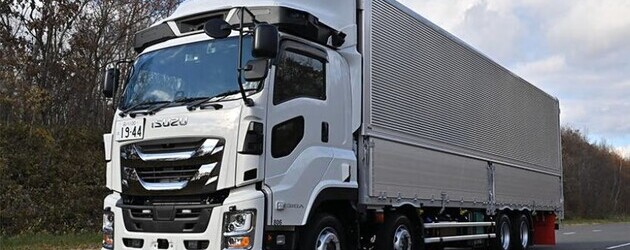
📌 Isuzu will begin public road testing of its Level 4 autonomous Giga 8×4 truck in 2026, aiming for full commercial launch in 2028 through a staged validation program across Japan’s logistics network.
-
Isuzu will deploy a single Level 4–capable Giga 8×4 truck for public demonstration in January 2026, operating between the Iwafune Parts Center in Tochigi and the Chubu Parts Center in Aichi.
-
The truck will run five days per week on the Shin-Tomei Expressway and adjacent service areas, with a safety driver onboard during the initial phase.
-
The 2026 tests will evaluate delivery speed improvements, operation in adverse weather and readiness of remote monitoring staff and safety crew.
-
The first validation step includes logistics basics such as autonomous loading and unloading tasks to assess real-world application.
-
In 2027, Isuzu plans to introduce 30 additional autonomous units capable of more complex end-to-end operations, including emergency dispatch and cargo hub interactions.
-
The company targets a full commercial launch of Level 4 autonomous trucks in 2028, contingent on successful results from earlier testing stages.
-
Isuzu is also building an autonomous test course in Hokkaido in 2027, underscoring its accelerated investment in in-house autonomous driving development.
-
The staged rollout reflects Japan’s broader effort to solve structural driver shortages and improve logistics efficiency through advanced automation.

RoboSense Reports Strong Growth and Innovation in LiDAR Technology

📌 RoboSense reported strong nine-month LiDAR sales growth, multiple OEM design wins and the launch of new sensor technologies, reinforcing its position in the automotive LiDAR market.
-
RoboSense reported significant sales growth for the nine months ending September 30, 2025, driven by rising LiDAR demand across ADAS, autonomous driving and robotics applications.
-
The company secured multiple design wins for mass-production LiDAR programs with global automotive OEMs and expanded partnerships with major autonomous driving developers.
-
RoboSense introduced new products including Active Camera 2.0 and “Fairy,” a high-precision mid-to-long-range digital LiDAR claimed to be the first of its kind.
-
These product launches strengthen RoboSense’s positioning in the global LiDAR market as OEMs scale ADAS and autonomy programs.
-
LiDAR product volume continues to expand across both passenger vehicle and commercial autonomous platforms, supporting broader adoption of multi-sensor perception systems.
-
Financial results remain unaudited, but the company highlighted broad application growth and steady order momentum.
-
Analysts currently hold a Sell rating on the HK:2498 stock with a HK$29 price target, despite the company’s technology and design-win progress.
-
RoboSense continues to focus on supplying automotive OEMs and Tier 1 suppliers globally with LiDAR solutions spanning near-, mid- and long-range use cases.
* Contents above are the opinion of ChatGPT, not an individual nor company
Self Driving Comparison! Who Does it Best?