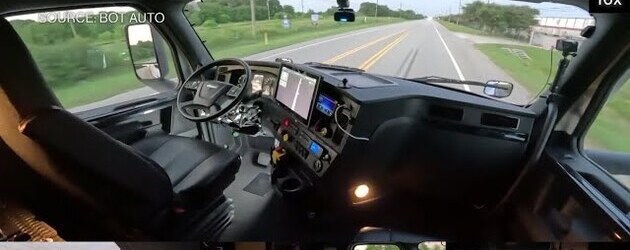

Vol. 260 | 2025.12.09
| Category | Company | Article |
|---|---|---|
| LiDAR Sensor | Vueron | Vueron Technology Receives Minister’s Commendation in ‘Deep Tech Startup 1000+’ from Ministry of SMEs and Startups |
| LiDAR Sensor | Aeva, Daimler | Aeva: Powering Daimler’s Next-Gen Freight Network |
| Self-driving | Nvidia | Nvidia releases open-source software for self-driving car development |
| Autonomous Driving | Wayve | Wayve buys Quality Match to accelerate autonomous driving rollout |
| LiDAR | Voyant | Voyant Photonics expands FMWC lidar platform |

Vueron Technology Receives Minister’s Commendation in ‘Deep Tech Startup 1000+’ from Ministry of SMEs and Startups
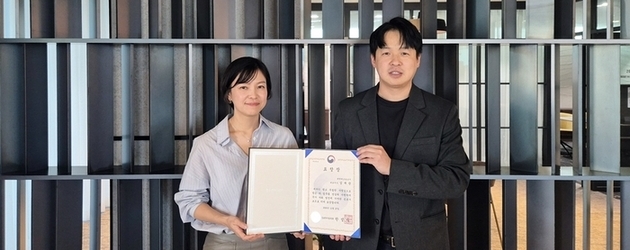
📌 Vueron CEO Kim Jae-kwang received a Minister’s Commendation for the company’s achievements in commercializing LiDAR perception technology and advancing localized autonomous driving solutions under the Deep Tech Startup 1000+ Project.
-
The Ministry of SMEs and Startups honored Vueron for its performance in the national Deep Tech Startup 1000+ (DIPS 1000+).
-
Vueron was selected for the program in May and is receiving up to KRW 600 million over three years to accelerate commercialization.
-
The award recognizes Vueron’s progress in LiDAR perception technology and its contributions to the localization of autonomous driving systems.
-
CEO Kim led the commercialization of VueOne for autonomous driving, ADAS, and smart infrastructure, and VueTwo for urban safety and crowd analysis.
-
Vueron introduced VueX, a platform that streamlines LiDAR data collection, labeling, training, and deployment in an intuitive, web-based environment.
-
VueOne supports real-time operation across diverse LiDAR sensors and automotive chipsets, expanding through global B2B licensing partnerships.
-
VueTwo is being deployed in municipal safety and crowd analysis systems, with adoption growing in public infrastructure.
-
Vueron has earned six global awards, including CES and Tech.AD honors, and continues to strengthen its global competitiveness with rising overseas sales.

Aeva: Powering Daimler’s Next-Gen Freight Network
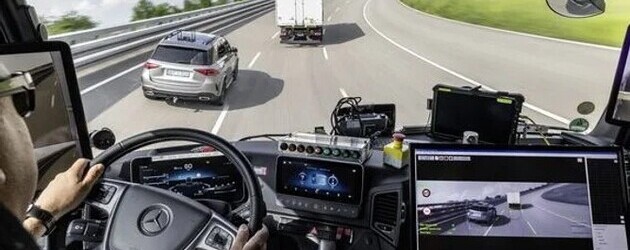
📌 Aeva and Daimler Truck reached key milestones toward integrating Aeva’s 4D LiDAR into Daimler’s next-generation automated trucks, while Aeva expands into smart-city infrastructure with new partnerships and funding.
-
Aeva completed its first prototype phase by integrating its 4D LiDAR hardware into operational Daimler Truck test vehicles for real-world performance validation.
-
The testing program supports software optimization and system integration ahead of Daimler’s planned high-volume production of automated trucks in 2027.
-
Aeva plans to deliver Atlas C-sample units in 2026; these production-intent components will undergo durability, reliability and manufacturing verification.
-
Parallel simulation and hardware trials ensure the sensing system meets Daimler’s operational and safety requirements.
-
The collaboration is shifting from early development to an operational deployment program, positioning Aeva’s 4D LiDAR as foundational sensing infrastructure.
-
Aeva is expanding beyond hardware into intelligent transportation systems through an exclusive partnership with D2 Traffic Technologies.
-
Apollo committed US$100 million in convertible financing to scale Aeva’s 4D LiDAR commercialization across U.S. traffic infrastructure markets.
-
Aeva continues strengthening its supply-chain capabilities, with leadership participating in industry forums focused on resilience and AI-driven operations.

Nvidia releases open-source software for self-driving car development
📌 Nvidia released Alpamayo-R1, an open-source vision-language-action model that enables self-driving cars to use reasoning and natural-language explanations to improve transparency and safety in autonomous decision-making.
-
Nvidia introduced Alpamayo-R1, an open-source VLA (vision-language-action) model designed to accelerate autonomous driving development.
-
The model converts sensor inputs into natural-language descriptions, supporting more interpretable decision-making.
-
Alpamayo-R1 uses “thinking-aloud” reasoning, allowing the vehicle to articulate its observations and planned actions as it navigates.
-
This approach addresses limitations of previous AV systems that provided minimal insight into why specific path-planning decisions were made.
-
Enhanced transparency helps engineers diagnose errors and improve safety performance more efficiently.
-
Nvidia positioned the open-source release as a catalyst for industry-wide standardization in evaluating reasoning-based AV models.
-
The software builds on Nvidia’s broader strategy to pair high-performance AI hardware with advanced open-source software tools.

Wayve buys Quality Match to accelerate autonomous driving rollout
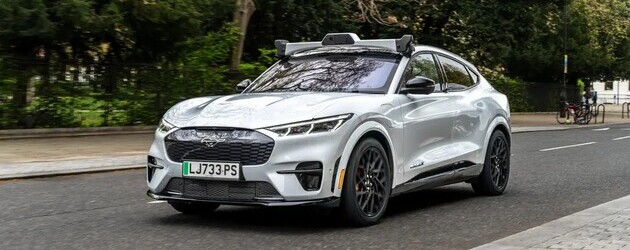
📌 Wayve acquired German startup Quality Match to strengthen data quality capabilities essential for scaling its AI Driver autonomous driving system toward commercial deployment.
-
Wayve purchased Quality Match, a German firm specializing in data quality assurance for computer vision and AI.
-
The acquisition adds 20 data specialists to Wayve and brings founder Daniel Kondermann onboard as Director of Data.
-
Quality Match enhances Wayve’s ability to analyze, interpret and validate large-scale video and driving datasets used to train its AI Driver system.
-
The integration aims to improve robustness, interpretability and overall performance of Wayve’s end-to-end autonomous driving models.
-
Wayve recently opened a new on-road testing and development hub in Stuttgart, expanding its presence within Germany’s automotive ecosystem.
-
Germany’s road network and engineering talent enable Wayve to refine AI-powered driving systems under diverse real-world conditions.
-
The acquisition supports Wayve’s broader strategy to commercialize AI-based autonomous driving solutions across Europe, the UK and the US.

Voyant Photonics expands FMWC lidar platform
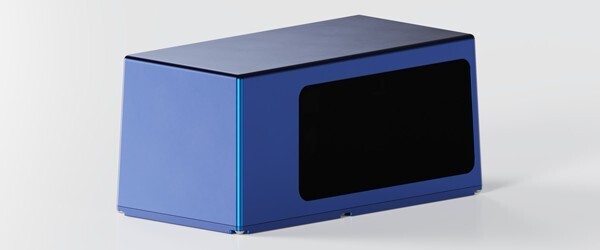
📌 Voyant Photonics expanded its Carbon FMCW lidar platform with new 32-line and 64-line variants, targeting compact, cost- and compute-constrained applications across robotics, drones, industrial systems and smart infrastructure.
-
Voyant introduced 32-line and 64-line versions of its Carbon FMCW lidar ahead of CES 2026, complementing the existing 128-line model
-
The new variants reduce data rates and integration complexity while maintaining FMCW advantages such as velocity measurement, interference immunity and high dynamic range.
-
Carbon sensors leverage Voyant’s silicon-photonics architecture, integrating beam steering and coherent detection on a single chip for mass-production scalability and calibration stability.
-
The lineup enables OEMs to tailor resolution and compute load to use cases ranging from AGVs and robotics to drones and edge devices.
-
FMCW technology provides per-pixel depth and motion information, supporting advanced spatial reasoning for industrial automation, smart infrastructure, logistics and defense.
-
Voyant aims to position 4D FMCW lidar as a mainstream machine-perception component rather than a niche automotive sensor.
-
Partnerships with semiconductor foundries and a global photonics supply chain support cost-efficient scaling and market expansion.
* Contents above are the opinion of ChatGPT, not an individual nor company
The Road Ahead for Driverless Trucking