

Vol. 264 | 2026.01.06
| Category | Company | Article |
|---|---|---|
| LiDAR Sensor | Vueron | Vueron Technology to Unveil ‘VueX’ at CES 2026 |
| Self-driving | Waymo | Waymo and Other Driverless Taxis Move Into a New Era |
| Autonomous Trucking | Waabi | Beyond the highway: Waabi’s bet on door-to-door autonomy |
| Autonomous Driving | MediaTek, Denso | MediaTek and Denso to develop SoCs for ADAS |
| LiDAR Sensor | Seyond | Seyond to Showcase Complete End-to-End LiDAR Portfolio and Mass-Production-Ready Solid-State LiDAR at CES 2026 |

Vueron Technology to Unveil ‘VueX’ at CES 2026
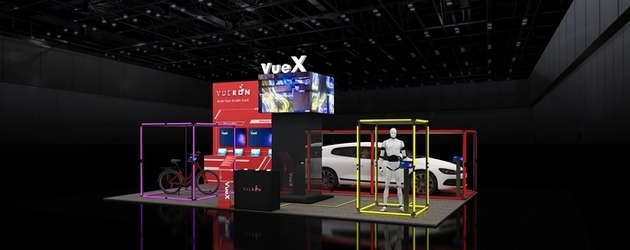
📌 Vueron Technology will unveil VueX, a LiDAR-based Cognitive AI foundry platform, at CES 2026, targeting global adoption across autonomous driving, robotics, and smart infrastructure.
-
Vueron Technology will participate in CES 2026, held in Las Vegas from January 7–10, where it will present its LiDAR-based Cognitive AI development platform, VueX.
-
VueX is a cloud-based, end-to-end platform that applies a foundry concept to LiDAR Cognitive AI, covering data collection, labeling, model training, and deployment in a single system.
-
The platform converts raw LiDAR data into high-quality training datasets within minutes to hours, supporting faster and more reliable AI model development for autonomous driving and smart city applications.
-
VueX allows customers to fully retain and reuse generated data and AI models without usage restrictions, enabling deployment across automotive, robotics, logistics, drones, and other industries.
-
The platform expands LiDAR perception beyond ADAS and autonomous driving into broader industrial and infrastructure use cases requiring scalable 3D perception AI.
-
Vueron has validated its technology through deliveries to global customers in the United States, Europe, and Japan, and positions VueX as a way to reuse globally proven Cognitive AI models.
-
At CES 2026, Vueron will demonstrate automated data labeling and Cognitive AI model generation at its booth in the Las Vegas Convention Center West Hall.
-
The company will also showcase hands-on demos that allow visitors to directly experience LiDAR-based perception and Cognitive AI workflows.

Waymo and Other Driverless Taxis Move Into a New Era
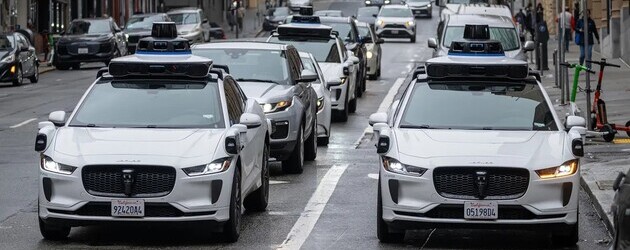
📌 In 2025, robotaxis shifted from technology trials to real-world business experiments, as Waymo, Tesla, and Zoox scaled deployments while testing how autonomous ride-hailing can become economically viable.
-
2025 marked the year autonomous robotaxis became a routine sight in major U.S. cities, despite high-profile incidents involving animals and a temporary service suspension during a San Francisco power outage.
-
Waymo now operates driverless taxi services across six U.S. cities, delivering passengers as reliably as conventional cabs in everyday use cases.
-
Tesla is expanding its ride-hailing trials in Austin and San Francisco, while preparing further rollouts in Arizona, Florida, and Nevada, currently with safety drivers onboard.
-
Zoox operates purpose-built robotaxis without steering wheels or pedals in cities including Las Vegas, Miami, and Seattle.
-
Industry sentiment improved after years of setbacks, with Waymo reporting over 1 million fully autonomous rides per month and targeting weekly volumes at that scale by the end of 2026.
-
Waymo is reportedly seeking to raise $15 billion at a $100 billion valuation and plans geographic expansion to Dallas, Houston, Miami, and additional markets.
-
Autonomous taxi operators are now experimenting with business models, including direct-to-consumer apps in some cities and partnerships with Uber in others, to test demand, pricing, and operational efficiency.
-
Collaborations such as Waymo’s partnership with Toyota highlight strategic moves to scale autonomy beyond fleet-owned vehicles and compete with Tesla’s privately owned FSD-enabled cars.

Beyond the highway: Waabi’s bet on door-to-door autonomy
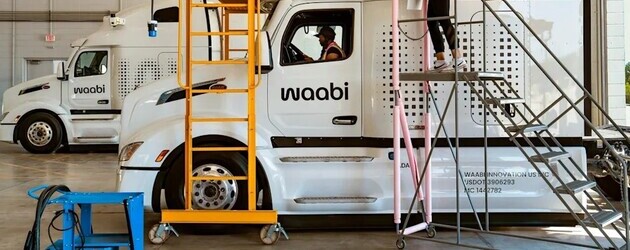
📌 Waabi is positioning door-to-door autonomous trucking as the only scalable commercial model, leveraging generative AI and deep OEM integration to move beyond highway-only autonomy.
-
Waabi announced a shift toward street-level, door-to-door autonomous trucking, alongside a new direct-to-customer business model, aiming to overcome the limitations of highway-only autonomy.
-
Lior Ron, Waabi’s COO and former CEO of Uber Freight, noted that rapid advances in generative AI have compressed autonomy timelines from years to quarters, accelerating readiness for commercial deployment.
-
Waabi emphasizes that fully driverless operation requires both software maturity and OEM-approved, fully redundant truck hardware, highlighting ongoing friction between autonomy software providers and vehicle manufacturers.
-
The company strongly favors a point-to-point freight model over hub-and-spoke, arguing that highway-only autonomy adds $200–$300 in first- and last-mile costs per leg that customers are unwilling to pay.
-
Hub-and-spoke autonomous models introduce operational complexity and reliability risks, especially for time-sensitive shippers such as Walmart, making them difficult to scale commercially.
-
Waabi believes most freight will remain end-to-end, facility-to-facility, requiring autonomous trucks to handle local roads, yards, and side streets in addition to highways.
-
Generative AI, large-scale simulation, and system generalization are positioned as key enablers that allow Waabi to move beyond the “highway trap” and support diverse road and facility types.
-
Waabi’s initial deployments will be executed with Volvo Autonomous Solutions, using Volvo-operated fleets to validate operations, maintenance, uptime, and ROI before broader adoption accelerates toward 2026.

MediaTek and Denso to develop SoCs for ADAS

📌 MediaTek and Denso are jointly developing an automotive-grade SoC to accelerate scalable, production-ready ADAS and cockpit platforms with strong AI perception and functional safety.
-
MediaTek has partnered with Denso to co-develop a custom automotive system-on-chip (SoC) targeting ADAS and cockpit applications.
-
The jointly developed SoC is designed as a scalable, production-ready foundation for next-generation driver-assistance platforms used by global automotive OEMs.
-
The platform combines MediaTek’s semiconductor and AI capabilities from its Dimensity AX platform with Denso’s expertise in vehicle integration and functional safety.
-
Development focuses on three priorities: automotive-grade safety, AI compute and perception performance, and reduced time to market for ADAS systems.
-
MediaTek contributes heterogeneous computing resources, including dedicated AI and neural processing unit accelerators and advanced image signal processing for ADAS workloads.
-
The SoC architecture supports multi-sensor fusion across cameras, radar, and LiDAR, with vision pipelines co-designed using Denso’s automotive domain knowledge.
-
Pre-validated automotive IP, safety work products, reference designs, and toolchains aim to shorten development cycles and improve overall design quality.
-
Key technical features include functional safety mechanisms such as a safety island and lockstep processing, automotive networking (TSN, CAN FD, LIN), and multi-camera MIPI CSI-2 interfaces.

Seyond to Showcase Complete End-to-End LiDAR Portfolio and Mass-Production-Ready Solid-State LiDAR at CES 202

📌 Seyond will showcase a full-spectrum, production-ready LiDAR portfolio at CES 2026, highlighted by its first mass-production solid-state LiDAR with an OEM design win.
-
Seyond will present its complete end-to-end LiDAR portfolio at CES 2026, covering ultra-long-range, long-range, and fully solid-state sensing for automotive, robotics, and intelligent infrastructure.
-
The company positions its portfolio as a single-supplier solution across the entire perception stack, reducing system integration complexity and accelerating development timelines.
-
Seyond highlighted flexible manufacturing and supply options, including U.S.-based production lines designed to meet BABA compliance for regulated and security-sensitive markets.
-
A key debut is the Hummingbird series, Seyond’s first fully solid-state LiDAR, with Hummingbird D1 targeting automotive OEMs and Hummingbird D1-R designed for robotics applications.
-
Hummingbird D1 is mass-production ready and has secured a world-first OEM design win, signaling readiness for large-scale deployment in passenger vehicles.
-
The solid-state architecture eliminates mechanical components, offering improved durability and reliability, along with a 140° × 100° field of view and high-resolution real-time 3D perception.
-
The Hummingbird series complements Seyond’s broader lineup, including Falcon K (ultra-long-range), Robin E1X (long-range), and Robin W (mid-range), enabling full perception coverage from a unified platform.
-
At CES 2026, Seyond will demonstrate live LiDAR performance and showcase an autonomous logistics delivery vehicle using Robin W, highlighting real-world deployment in last-mile and industrial autonomy.
* Contents above are the opinion of ChatGPT, not an individual nor company
CES Show Floor Trivia (Vueron Technology at LVCC West Hall #3569)