

Vol. 265 | 2026.01.13
| Category | Company | Article |
|---|---|---|
| LiDAR Sensor | Innoviz, Vueron | Innoviz Technologies Partners with Vueron to Accelerate AI Development for Automotive and Smart Infrastructure Applications |
| Self-driving | Nvidia | Nvidia unveils self-driving car tech as it seeks to power more products with AI |
| Autonomous Trucking | Kodiak, Bosch | Kodiak AI teams up with Bosch to scale hardware for self-driving trucks |
| LiDAR Sensor | BYD | BYD entry-level hatchbacks to feature LiDAR sensors in China |
| LiDAR Sensor | Hesai | China’s Hesai will double production as lidar sensor industry shakes out |

Innoviz Technologies Partners with Vueron to Accelerate AI Development for Automotive and Smart Infrastructure Applications
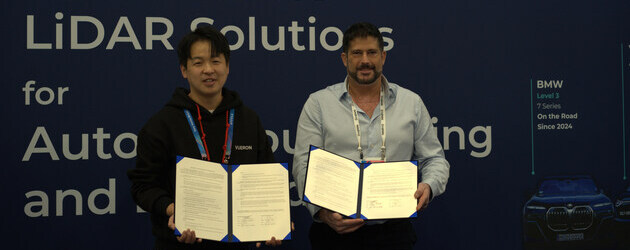
📌 By combining automotive-grade LiDAR with cloud-based automated annotation, Innoviz and Vueron aim to shorten perception development cycles and scale AI-driven autonomy.
-
Innoviz Technologies and Vueron Technology signed an MOU to integrate InnovizTwo and InnovizSMART LiDAR data into Vueron’s cloud-based VueX AI development platform.
-
The integration establishes a unified cloud environment enabling automated LiDAR data annotation, training, validation, and deployment for automotive and smart infrastructure perception development.
-
VueX uses AI-driven auto-labeling on LiDAR point clouds, generating bounding boxes and object classifications while significantly reducing manual effort for safety-critical perception workflows.
-
Automotive OEMs and infrastructure operators can upload Innoviz LiDAR data directly to VueX, accelerating perception model development through streamlined annotation and fine-tuning processes.
-
The collaboration builds on prior deployments where InnovizOne supported Vueron’s autonomous driving platform, now extending to InnovizTwo for automotive and InnovizSMART for infrastructure.
-
The joint solution delivers an end-to-end AI cloud workflow covering data storage, visualization, processing, labeling, training, validation, and deployment within a single platform.
-
Innoviz and Vueron are demonstrating the integrated VueX–Innoviz LiDAR solution live at CES 2026, highlighting real-world automotive and smart infrastructure use cases.

Nvidia unveils self-driving car tech as it seeks to power more products with AI

📌 NVIDIA is positioning Alpamayo as a foundational platform for physical AI, extending its dominance from AI compute into autonomous vehicles and real-world robotic systems.
-
NVIDIA unveiled “Alpamayo,” a new self-driving car platform at CES 2026, positioning AI to move from software into real-world physical products.
-
CEO Jensen Huang said Alpamayo adds reasoning capabilities, enabling autonomous vehicles to handle rare scenarios, navigate complex environments, and explain driving decisions in real time.
-
NVIDIA is collaborating with Mercedes-Benz to launch a driverless vehicle powered by Alpamayo, starting in the U.S. before expanding to Europe and Asia.
-
The platform signals NVIDIA’s shift from a compute-centric chip supplier toward a full-stack platform provider for physical AI and autonomous systems.
-
Alpamayo is released as an open-source AI model on Hugging Face, allowing researchers to access, retrain, and extend the model for autonomy use cases.
-
NVIDIA’s move intensifies competition with autonomy developers such as Tesla, highlighting challenges around solving long-tail edge cases in self-driving systems.
-
The company also announced upcoming Rubin AI chips, designed to deliver higher efficiency and lower energy consumption to reduce the cost of deploying AI at scale.

Kodiak AI teams up with Bosch to scale hardware for self-driving trucks
📌 Kodiak’s partnership with Bosch underscores how autonomous trucking is shifting from pilots to scalable manufacturing, with freight seen as the clearest near-term path to commercialization.
-
Kodiak AI partnered with Bosch to scale manufacturing of autonomous trucking hardware as it transitions from pilot programs to commercial deployment.
-
The agreement reflects growing investor pressure on self-driving companies to prove viable business models after years of high spending and limited revenue.
-
Freight trucking is emerging as a preferred commercialization path due to predictable routes and clearer economics compared with passenger vehicles.
-
Bosch will supply automotive-grade sensors and vehicle actuation systems, including steering technologies, announced at CES 2026 in Las Vegas.
-
The partners will co-develop a production-grade, redundant autonomous platform integrating hardware, firmware, and software for factory installation or retrofitting.
-
Kodiak claims it is among the few autonomous trucking firms operating driverless trucks without human safety drivers in commercial service.
-
Bosch continues expanding its autonomous mobility footprint by supplying sensors, compute, and vehicle control systems to OEMs and technology companies.

BYD entry-level hatchbacks to feature LiDAR sensors in China
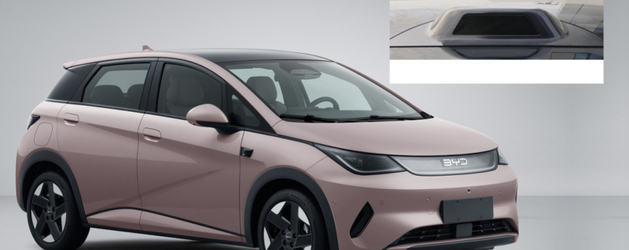
📌 BYD’s decision to deploy LiDAR and high-end ADAS compute in entry-level EVs shows how quickly advanced perception is becoming standard in China’s mass-market vehicles.
-
BYD will add LiDAR sensors to entry-level hatchbacks Seagull and Dolphin in China, according to filings with the Ministry of Industry and Information Technology.
-
The models previously used DiPilot 100 with cameras, mmWave radars, and ultrasonic sensors, and now upgrade perception with optional roof-mounted LiDAR.
-
LiDAR integration enables DiPilot 300 (God’s Eye B), previously limited to higher-end BYD and Denza models.
-
DiPilot 300 uses a single LiDAR supplied by RoboSense, offering up to 350-meter detection range.
-
The system also integrates the NVIDIA Drive Orin processor with 254 TOPS, enabling Navigate on Autopilot on highways and urban roads.
-
Adding LiDAR and high-performance compute to low-cost vehicles is rare and signals intensifying ADAS competition in China’s mass-market EV segment.
-
BYD appears to be leveraging scale and pricing pressure to defend leadership as LiDAR-based assisted driving moves rapidly downmarket.

China’s Hesai will double production as lidar sensor industry shakes out
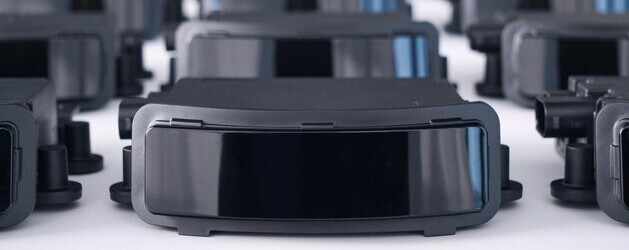
📌 Hesai’s rapid scale-up underscores how China’s EV-driven demand and aggressive cost reductions are reshaping the global LiDAR market as U.S. competitors struggle to survive.
-
Hesai plans to double annual LiDAR production capacity from 2 million to 4 million units in 2026, up from just over 1 million units in 2025.
-
Hesai’s expansion follows the Chapter 11 bankruptcy filing of U.S. rival Luminar, highlighting a sharp divergence in global LiDAR market trajectories.
-
The company cited accelerating demand from automotive and robotics customers, disclosed during CES 2026 in Las Vegas.
-
Hesai said LiDAR is now used in roughly 25% of new EVs sold in China, with many models expected to integrate three to six sensors per vehicle.
-
The company claims 24 automotive customers, including a top European OEM, and reported 4 million orders for its new ATX LiDAR sensor.
-
Outside China, automotive LiDAR adoption remains volatile, contributing to Luminar’s failed OEM programs with Volvo, Polestar, and Mercedes-Benz.
-
Hesai is also targeting robotics markets and has reduced LiDAR costs by 99.5% over eight years, intensifying price pressure across the industry.
* Contents above are the opinion of ChatGPT, not an individual nor company
NVIDIA debuts new robotics and self driving technology at CES