
Vol. 268 | 2026.02.03
| Category | Company | Article |
|---|---|---|
| LiDAR Sensor | Rivian, RoboSense | Rivian’s Undisclosed Self-Driving LiDAR Supplier Points to China’s RoboSense |
| LiDAR Sensor | LiDAR Sensor | Automotive LiDAR Sensors Market Report 2026 – Global Industry Size, Share, Trends, Opportunity, and Forecast, 2021-2031 |
| Autonomous Trucking | Gatik | Gatik launches fully driverless commercial trucking operations |
| Self-driving | WeRide | WeRide launches GENESIS simulation platform to accelerate global autonomous driving development |
| LiDAR | LightIC | LightIC Technologies Announces New FMCW LiDAR with Exceptional Cost and Power-efficiency for Automotive and Robotic Applications |

Rivian’s Undisclosed Self-Driving LiDAR Supplier Points to China’s RoboSense

📌Rivian’s decision to deploy low-cost LiDAR in the R2 signals a broader industry shift toward sensor fusion and large-scale ground-truth data generation for autonomous driving.
-
Rivian announced it will integrate LiDAR sensors into its R2 SUV starting in late 2026, citing a sharp cost decline that makes LiDAR viable for mass-market vehicles.
-
Rivian did not disclose its LiDAR supplier, but multiple industry signals point to RoboSense as the likely provider.
-
RoboSense previously disclosed partnerships with a North American NEV brand and a global top-tier EV pickup OEM, aligning closely with Rivian’s autonomy roadmap.
-
RoboSense has rapidly scaled shipments, delivering over 150,000 automotive LiDAR units in November 2025 and securing nearly one million units in cumulative OEM orders.
-
Rivian positions LiDAR as a core component of its sensor fusion strategy, combining LiDAR with 11 cameras and five radars to generate high-fidelity ground-truth data for model training.
-
Each LiDAR-equipped R2 vehicle will act as a “ground-truthing vehicle,” continuously feeding real-world depth and redundancy data into Rivian’s autonomy stack.
-
CEO RJ Scaringe explicitly contrasts Rivian’s multi-sensor approach with Tesla’s camera-only strategy, arguing LiDAR provides critical information that vision systems alone cannot deliver.

Automotive LiDAR Sensors Market Report 2026 – Global Industry Size, Share, Trends, Opportunity, and Forecast, 2021-2031
📌 Automotive LiDAR is entering a high-growth phase driven by regulation, cost reduction, and FMCW adoption, shifting the technology from premium vehicles toward mass-market ADAS and autonomous driving.
-
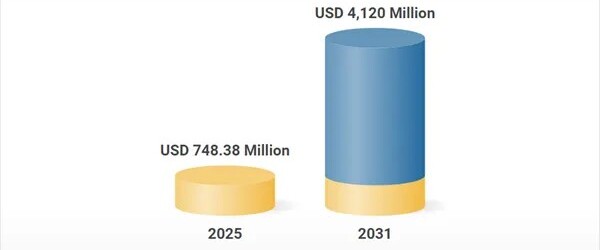
The global automotive LiDAR sensors market is projected to grow from USD 748.4 million in 2025 to USD 4.12 billion by 2031, representing a CAGR of 32.9%.
-
Autonomous driving development and stricter vehicle safety regulations continue to drive LiDAR adoption across ADAS and automated driving applications.
-
Regulatory mandates, such as the U.S. NHTSA Automatic Emergency Braking rule requiring high-speed collision avoidance by 2029, accelerate demand for high-fidelity sensing beyond cameras and radar.
-
High component and manufacturing costs remain a key barrier, limiting LiDAR adoption mainly to premium vehicles and commercial fleets.
-
Cost reduction through solid-state architectures and volume scaling is enabling LiDAR penetration into mass-market EVs and passenger vehicles.
-
Major suppliers report rapid shipment growth, including Hesai Group and RoboSense, signaling early-stage mass-market transition.
-
FMCW LiDAR is emerging as a key technology trend, offering 4D perception with velocity measurement, sunlight immunity, and improved robustness for highway autonomy.
-
OEMs increasingly position LiDAR as a standard safety feature rather than a luxury option, with Li Auto committing to LiDAR across its full vehicle lineup.

Gatik launches fully driverless commercial trucking operations
📌 Gatik’s large-scale, revenue-generating Level 4 truck deployments mark a clear transition of autonomous trucking from pilot programs to commercially viable logistics operations.
-
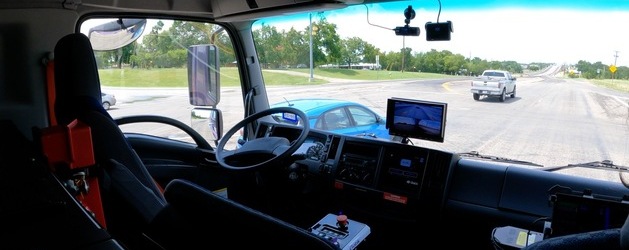
Gatik became the first company in North America to operate fully driverless trucks at commercial scale, with no human driver or safety operator onboard.
-
Gatik’s medium-duty autonomous trucks now perform daily revenue-generating deliveries for Fortune 50 retailers across Texas, Arkansas, and Arizona.
-
The company has secured over USD 600 million in committed, multiyear, non-cancelable revenue from customers in e-commerce, consumer packaged goods, and logistics.
-
Since mid-2025, Gatik has completed 60,000 fully driverless delivery orders without incidents, logging more than 10,000 driverless miles and 2,000+ hours of operation on public roads.
-
Gatik currently operates 10 driverless trucks and plans to scale to 60 vehicles in the near term, with hundreds expected by the end of the year.
-
Operations rely on Gatik Driver, the company’s third-generation Level 4 autonomous system with redundant safety-critical architectures.
-
The deployment follows extensive safety reviews by U.S. federal and state regulators and builds on Gatik’s partnership with Isuzu Motors for autonomous-ready medium-duty platforms.
-
Gatik follows an asset-light business model and scales operations with partners including NVIDIA and Ryder.

WeRide launches GENESIS simulation platform to accelerate global autonomous driving development

📌 WeRide’s GENESIS platform highlights how simulation, generative AI, and closed-loop optimization are becoming core infrastructure for scaling autonomous driving globally.
-
WeRide launched GENESIS, a self-developed, general-purpose simulation platform to accelerate large-scale autonomous driving development and commercialization.
-
GENESIS combines Physical AI and Generative AI to bridge real-world physics with virtual simulation for unified training and validation.
-
The platform targets long-tail and extreme scenarios that are difficult to cover through on-road testing, including severe weather, complex traffic conflicts, and rare edge cases.
-
GENESIS operates on a closed-loop architecture built around four core AI modules: AI Scenarios, AI Agents, AI Metrics, and AI Diagnosis.
-
The AI Scenarios module generates critical driving situations using billions of kilometers of real-world driving data and long-term operational archives.
-
The AI Agents module models realistic behavior of vehicles, pedestrians, and cyclists to improve decision-making robustness across complex ODDs.
-
AI Metrics and AI Diagnosis quantify performance, identify root causes, and automate optimization, enabling rapid iteration and objective evaluation.
-
WeRide positions GENESIS as a “one platform, global training” solution that compresses millions of kilometers of physical testing into days of simulation and supports ADAS through Level 4 autonomy.

LightIC Technologies Announces New FMCW LiDAR with Exceptional Cost and Power-efficiency for Automotive and Robotic Applications

📌 LightIC’s SoC-based FMCW LiDAR platform demonstrates how silicon photonics and automotive-grade integration are accelerating the commercialization of long-range, power-efficient LiDAR.
-
LightIC Technologies and indie announced a strategic partnership integrating indie’s iND83301 SoC into LightIC’s silicon photonics–based FMCW LiDAR architecture.
-
The integration replaces FPGA-based processing with an automotive-grade SoC, significantly improving size, weight, power, and cost (SWaP-C).
-
The combined platform achieves up to an 80% reduction in power consumption and a 40% reduction in system size compared with FPGA-based FMCW LiDAR solutions.
-
LightIC positions the architecture as a key step toward FMCW LiDAR commercialization by reducing system-level complexity while meeting OEM scalability requirements.
-
The platform enables Lark™, a long-range FMCW LiDAR exceeding 500 meters, targeting automotive and intelligent transportation applications requiring precise velocity measurement and sunlight immunity.
-
Using the same architecture, LightIC introduced FR60™, a tennis-ball-sized FMCW LiDAR designed for robotics, industrial automation, and physical AI applications.
-
The partnership highlights a broader industry shift toward SoC-based FMCW LiDAR designs to enable cost-efficient, production-ready deployment across automotive and robotics markets.
* Contents above are the opinion of ChatGPT, not an individual nor company
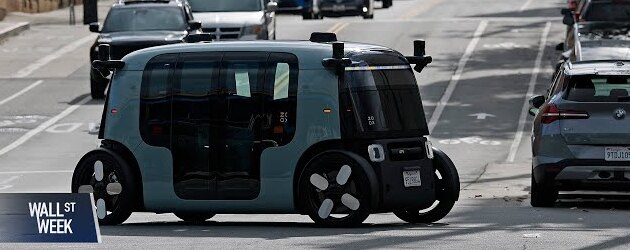
Waymo, Zoox, Tesla: Who Wins the Robotaxi Race?