

Vol. 271 | 2026.02.24
| Category | Company | Article |
|---|---|---|
| LiDAR Sensor | MicroVision | Sub-$200 Lidar Could Reshuffle Auto Sensor Economics MicroVision says its sensor could one day break the $100 barrier |
| LiDAR Sensor | Rivian | Everything We Know About the Rivian R2 Before the Carmaker Spills the Beans on March 12 |
| Autonomous Driving | NXP | Building the Autonomous Edge with Agentic AI |
| Self-driving | Glydways | Metro Atlanta’s next autonomous vehicle project has broken ground |
| Autonomous Driving | Orix, RoboTruck | Driving Force: ORIX and RoboTruck Inc. team up to transform Japan’s logistics sector |

Sub-$200 Lidar Could Reshuffle Auto Sensor Economics MicroVision says its sensor could one day break the $100 barrier

📌MicroVision’s sub-$200 solid-state lidar target could shift lidar from premium autonomous programs to scalable ADAS deployment, making cost no longer the primary barrier to adoption.
-
MicroVision targets production pricing below $200 per unit for its solid-state automotive lidar, with a long-term goal of $100 to expand adoption into mainstream ADAS.
-
Mechanical lidars historically cost ~$80,000 and now sell for $10,000–$20,000, but solid-state designs promise further order-of-magnitude cost reductions at scale.\
-
The Movia S uses 905nm laser pulses and phased-array beam steering, offering 180-degree horizontal field of view and up to ~200 meters detection range.
-
Solid-state lidar sacrifices 360-degree coverage typical of mechanical units, requiring multiple sensors per vehicle but potentially lowering total system cost.
-
At $100–$200 pricing, lidar becomes economically viable as an augmentation to camera and radar-based ADAS rather than limited to premium autonomous vehicles.
-
Integration complexity increases as OEMs must align, calibrate, and fuse data from multiple lidar units into a cohesive perception system.
-
Competitors including Hesai, RoboSense, Luminar, and Velodyne have announced sub-$500 targets, but sub-$200 pricing depends on high-volume production commitments.
-
As lidar cost declines, OEM decisions will shift from price-driven rejection to strategic evaluation of 3D sensing value within safety and perception architectures.

Everything We Know About the Rivian R2 Before the Carmaker Spills the Beans on March 12

📌 Rivian positions the R2 as a cost-optimized, AI-defined SUV that will determine its path to profitability, while phased LiDAR deployment and limited 2026 production add strategic risk.
-
Rivian will announce final specifications and pricing for the R2 on March 12, positioning the compact SUV as a profitability inflection point after launching higher-priced R1 models.
-
R2 targets a $45,000 base price and aims to cut production costs roughly in half versus R1 through vertical integration, zonal architecture, and controller consolidation.
-
The Launch Edition is based on the Dual-Motor Performance variant with an 87.4 kWh usable battery, 0–60 mph in 3.6 seconds, 300+ miles of range, and peak 240 kW fast charging.
-
Rivian plans additional battery options, including a ~75 kWh LFP pack and a ~95 kWh Max pack, but early sales will focus on higher-margin Premium trims.
-
Rivian positions R2 as its first “AI-defined vehicle,” integrating an in-house inference chip, AI Assistant, and AI agents to support advanced autonomy development.
-
R2 will eventually feature LiDAR, but early production units will ship without it, and Rivian does not plan retrofits, potentially affecting buyer timing decisions.
-
The company expects 62,000–67,000 total deliveries in 2026, implying roughly 20,000–25,000 R2 units in its first year, with gradual production ramp-up.
-
Global expansion faces delays, with Canada postponed to 2027 and European timelines dependent on the Georgia plant, underscoring supply and scaling constraints.

Building the Autonomous Edge with Agentic AI

📌NXP advances the autonomous edge by combining full-stack Edge semiconductors with agentic AI to enable real-time, secure, and scalable autonomy across industries, including transportation.
-
NXP Semiconductors positions the “autonomous edge” as the next phase of AI, shifting intelligence from centralized cloud systems to real-time Edge AI embedded in physical devices.
-
Edge AI enables machines to sense and act locally, reducing latency, bandwidth dependency, and energy costs compared to cloud-only architectures.
-
The projected 394 zettabytes of global data by 2028 reinforces the need for localized processing in vehicles, factories, and smart infrastructure.
-
NXP emphasizes full-stack semiconductor integration — combining processing, connectivity, power management, security, and functional safety — as a prerequisite for scalable Edge AI deployment.
-
Through its acquisition of Kinara, NXP expands its portfolio with programmable NPUs to support workloads ranging from TinyML to generative AI at the edge.
-
The next evolution is agentic AI, which moves beyond perception and generative AI to goal-driven systems capable of planning, coordinating, learning, and executing autonomously.
-
In transportation and autonomous driving, agentic AI can enhance real-time risk interpretation and decision-making to improve safety and operational resilience.
-
Successful deployment requires right-sized AI models, secure-by-design silicon, functional safety compliance, and ecosystem collaboration across hardware, software, and policy domains.

Metro Atlanta’s next autonomous vehicle project has broken ground

📌 Atlanta’s airport district launches a guideway-based autonomous transit pilot with Glydways to validate scalable, airport-connected mobility infrastructure ahead of potential regional expansion.
-
ATL Airport Community Improvement Districts broke ground on an Automated Transit Network (ATN) Demonstration Pilot near Hartsfield-Jackson Atlanta International Airport.
-
The pilot will deploy a free, on-demand autonomous transit system along a 0.5-mile dedicated guideway connecting the ATL SkyTrain at the Georgia International Convention Center to the Gateway Center Arena.
-
The system uses autonomous vehicle technology from Glydways, designed for scalable, guideway-based urban mobility.
-
Project leaders position the ATN as a real-world validation of system capacity, scalability, and operational performance in dense airport-adjacent environments.
-
The pilot is scheduled to open to the public in December, with performance data informing potential network expansion.
-
Future expansion depends on a feasibility study led by MARTA, evaluating scalability to additional south metro destinations.
-
AACIDs covers a 15.7-mile commercial corridor across Fulton and Clayton Counties, creating a defined deployment zone for mobility experimentation.
-
A potential long-term application includes connecting the airport’s domestic and international terminals, addressing a key intermodal “missing link.”

Driving Force: ORIX and RoboTruck Inc. team up to transform Japan’s logistics sector
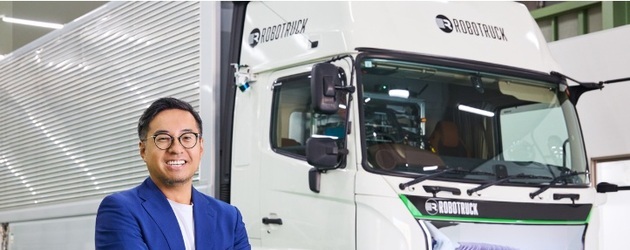
📌 ORIX’s investment in RoboTruck positions Level 4 autonomous trucking as a structural solution to Japan’s logistics labor crisis while accelerating commercialization through fleet-scale partnerships.
-
ORIX invested in RoboTruck Inc. in July 2025 to accelerate Level 4 autonomous truck deployment in Japan.
-
Japan faces a severe truck driver shortage driven by demographic decline and 2024 work-style reforms limiting overtime, creating structural pressure on logistics capacity.
-
The global autonomous truck market is projected to reach tens of billions of dollars by the early 2030s, with double-digit CAGR supported by AI and sensor advances.
-
RoboTruck targets Level 4 autonomy for heavy-duty trucks, with commercial-scale deployment still at an early stage globally despite U.S. and China pilot programs.
-
ORIX contributes more than capital through ORIX Auto Corporation, which operates a fleet of over 1.4 million vehicles and provides direct access to logistics customers.
-
The partnership will develop autonomous freight routes, beginning with trunk corridors such as Tokyo–Nagoya and Tokyo–Osaka, initially focusing on warehouse-to-warehouse operations.
-
Government subsidies and a five-year logistics policy framework support automation, but structural industry inefficiencies require scalable technological solutions.
-
Autonomous trucking aims to mitigate labor shortages, improve safety, optimize resource allocation, and support long-term electrification and sustainability goals.
* Contents above are the opinion of ChatGPT, not an individual nor company
Thousands of Utah self-driving taxis, buses envisioned by 2034 Olympics