
Vol. 252 | 2025.10.14
| Category | Company | Article |
|---|---|---|
| Autonomous Driving | Volkswagen, Xpeng | EXCLUSIVE Volkswagen to licence Xpeng’s autonomous driving solution for it’s China EVs in 2026 |
| LiDAR Sensor | Aeye | AEye Has Begun Shipments of Apollo to a Global Defense Contractor for Use in Manned and Unmanned Aerial Vehicles |
| Self-driving | GM | New Info Solidifies Plans For GM’s Self-Driving Tech In Europe |
| Autonomous Trucking | Hyundai, PlusAI | Hyundai Motor and PlusAI Recognized in TIME’s ‘Best Inventions 2025’ for Autonomous Hydrogen Fuel Cell Truck |
| Autonomous Trucking |
Evocargo |
Evocargo launches UAE’s first commercial unmanned cargo transportation |

EXCLUSIVE Volkswagen to licence Xpeng’s autonomous driving solution for it’s China EVs in 2026
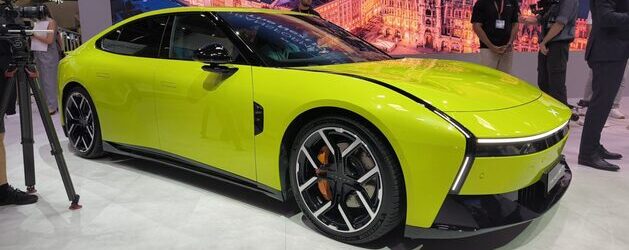
📌 Volkswagen partners with Xpeng to integrate its XNGP autonomous driving and AI chip technologies into China-made EVs starting in 2026.
-
Volkswagen will integrate Xpeng’s autonomous driving solution, XNGP, into its China EV lineup starting in 2026.
-
The first model equipped with XNGP will be a mid-size SUV jointly developed by Volkswagen and Xpeng.
-
Volkswagen invested €700 million in Xpeng in 2023, acquiring a 4.99% stake to deepen cooperation on EV and ADAS technologies.
-
Both companies are co-developing a new China Electronic Architecture (CEA), an updated E/E platform to be used across all VW EVs in China.
-
Xpeng will also supply its in-house Turing AI ADAS chips to Volkswagen starting in 2026.
Volkswagen aims to localize EV development under its “in China for China” strategy, enhancing cost efficiency and speed. -
Cariad China, once leading VW’s ADAS software, will shift to an integration role as VW partners with external tech firms like Xpeng and Rivian.
-
XNGP, Xpeng’s vision-based, HD map-free autonomous driving system, positions VW as a competitor to Tesla’s FSD in China.

AEye Has Begun Shipments of Apollo to a Global Defense Contractor for Use in Manned and Unmanned Aerial Vehicles

📌 AEye begins delivering its Apollo software-defined LiDAR to a U.S. defense contractor, extending its ultra-long-range sensing technology into aviation and defense markets.
-
AEye has started shipments of its Apollo software-defined LiDAR sensor to a major U.S. defense contractor for use in both manned and unmanned aerial vehicles.
-
Apollo enables ultra-long-range detection, identifying small obstacles such as wires from distances up to one kilometer.
-
The sensor enhances navigation safety in complex environments, including urban areas and mountainous terrain.
-
Its software-defined design allows configuration for multiple mission scenarios and rapid adaptation across platforms.
-
Apollo’s compact form factor provides flexible mounting options for various aircraft, drones, and helicopters.
-
AEye positions Apollo as a key solution for aviation and defense, addressing high-speed, small-object detection challenges.
-
The company expects this deployment to expand its presence beyond automotive and ITS into defense, UAV, and commercial aviation sectors.
-
AEye highlights LiDAR’s growing importance for safety-critical applications across transportation and security market.

New Info Solidifies Plans For GM’s Self-Driving Tech In Europe
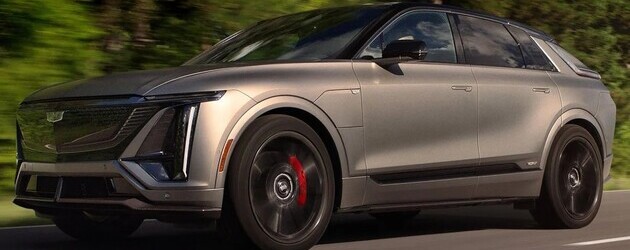
📌 GM files for a European trademark of Super Cruise, advancing plans to bring its LiDAR-based hands-free driving technology to Europe as part of Cadillac’s EV expansion.
-
General Motors is preparing to launch its Super Cruise hands-free driving system in Europe, marking a major step in the global rollout of its ADAS technology.
-
GM filed a European Union trademark for “Super Cruise” on October 3, 2025, confirming earlier plans to introduce the system to European markets.
-
Super Cruise enables hands-free driving on compatible highways using a combination of LiDAR-based mapping, GPS, cameras, and radar sensors.
-
The system is already deployed across GM vehicles in North America and covers over one million miles of pre-mapped roads.
-
The Cadillac Lyriq, Vistiq, and Optiq sold in Europe are equipped with the necessary hardware for Super Cruise activation.
-
European regulatory approval remains the key step before deployment, as authorities assess compliance with local autonomy and safety standards.
-
The launch aligns with Cadillac’s strategy to rebuild its European presence through luxury EVs and compete with BMW, Mercedes-Benz, and Audi.
-
GM aims to strengthen its “hands-free” technology leadership globally, extending Super Cruise beyond North America into Europe and China.

Hyundai Motor and PlusAI Recognized in TIME’s ‘Best Inventions 2025’ for Autonomous Hydrogen Fuel Cell Truck
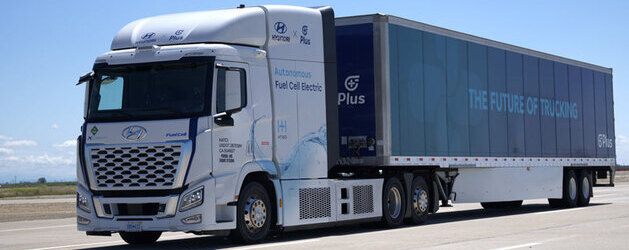
Click the image above to read the article.
📌 Hyundai Motor and PlusAI’s hydrogen-powered Level 4 autonomous truck earns TIME’s “Best Inventions 2025” honor for redefining sustainable long-haul freight.
-
Hyundai Motor and PlusAI’s autonomous XCIENT Fuel Cell truck has been named one of TIME’s “Best Inventions of 2025.”
-
The Class 8 hydrogen-powered truck integrates Hyundai’s XCIENT Fuel Cell platform with PlusAI’s Level 4 autonomous SuperDrive™ system.
-
The collaboration delivers a zero-emission, fully autonomous solution for long-haul freight operations, improving efficiency and sustainability.
-
Hyundai’s XCIENT Fuel Cell is the world’s first mass-produced hydrogen-powered heavy-duty truck, deployed in ten countries with nearly 10 million cumulative miles.
-
The truck supports hydrogen-corridor infrastructure, enhancing fleet utilization and enabling continuous hub-to-hub operations.
-
Ongoing deployments include the NorCAL ZERO Project in California and the HTWO Logistics Initiative in Georgia, validating real-world performance.
-
The partnership exemplifies the convergence of clean energy and autonomy, setting a new benchmark for sustainable logistics and freight technology.
-
TIME’s recognition underscores Hyundai and PlusAI’s leadership in combining hydrogen mobility with AI-driven autonomy for next-generation transportation.

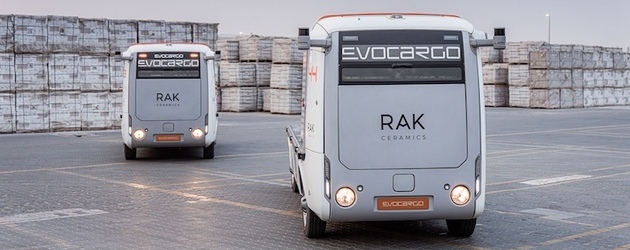
Evocargo launches UAE’s first commercial unmanned cargo
Click the image above to read the article.
📌 Evocargo debuts the UAE’s first commercial self-driving electric truck fleet, using LiDAR-based perception to power sustainable, autonomous logistics.
-
Evocargo has launched the UAE’s first commercial fleet of unmanned electric cargo trucks in the Al Jazeera Al Hamra industrial zone.
-
The project marks a milestone in the country’s commitment to autonomous and sustainable transportation.
-
The self-driving N1 trucks are equipped with a fifth-generation autopilot and an AI-powered multi-sensor perception system.
-
Vehicles use LiDARs, sonars, and cameras to navigate complex industrial environments with real-time data processing.
-
Each truck operates up to 200 km per charge, supporting continuous transport cycles with automated loading and unloading.
-
The partnership with RAK Ceramics demonstrates the integration of autonomous logistics into commercial operations.
-
Evocargo’s Robots-as-a-Service (RaaS) model enables scalable, subscription-based access to autonomous transport solutions.
-
The initiative reinforces the UAE’s goal of advancing smart mobility and ESG-driven industrial innovation.
* Contents above are the opinion of ChatGPT, not an individual nor company
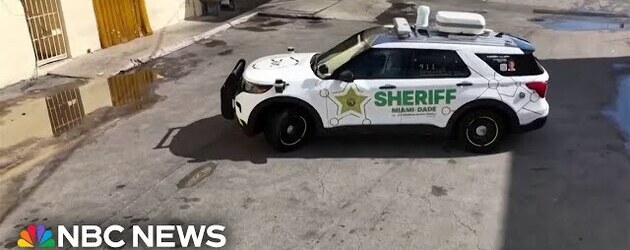
Nation’s first autonomous police car unveiled in Miami