

Vol. 258 | 2025.11.25
| Category | Company | Article |
|---|---|---|
| Autonomous Driving | Waymo, Hyundai | Waymo’s Hyundai Ioniq 5 Robotaxis Hit The Road For Testing |
| Autonomous Driving | Amazon | Amazon launches robotaxi service in San Francisco in challenge to Google’s Waymo |
| Autonomous Trucking | PoniAI | Pony AI launches 4th-gen autonomous truck lineup, set for deployment in 2026 |
| ADAS | BMW, Momenta | BMW’s China-built iX3 to feature Momenta’s ADAS solution |
| LiDAR Sensor | LiDAR | Global LiDAR Market Size and Forecast 2025–2033 |

Waymo’s Hyundai Ioniq 5 Robotaxis Hit The Road For Testing
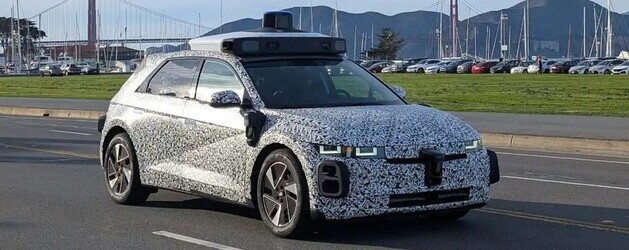
📌 Waymo has begun manual on-road testing of Hyundai Ioniq 5 robotaxi prototypes in San Francisco, marking a key step toward integrating the EV into its autonomous fleet.
-
Waymo started manual on-road testing of Hyundai Ioniq 5 vehicles in San Francisco as part of their preparation for full driverless deployment.
-
The Ioniq 5 units are built at Hyundai’s Metaplant in Georgia and equipped with Waymo’s sixth-generation autonomous driving system.
-
The sensor suite includes 13 cameras, four lidar sensors, six radars, and multiple microphones, enabling advanced perception for urban robotaxi operations.
-
Waymo’s move follows the phase-out of its Chrysler Pacifica fleet and the discontinuation of Jaguar I-Pace production, accelerating the transition to new platforms.
-
The company plans to introduce a mixed fleet including the Hyundai Ioniq 5 and Zeekr’s custom robotaxi shuttle for different service form factors.
-
Waymo’s leadership expects robotaxi offerings to diversify by use case, supporting varied passenger needs across markets.
-
The Ioniq 5 testing phase aligns with Waymo’s broader expansion plan to operate in at least 12 U.S. cities by the end of 2026, including San Diego, Las Vegas, and Detroit.

Amazon launches robotaxi service in San Francisco in challenge to Google’s Waymo
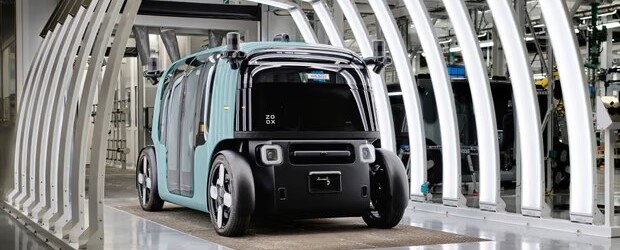
📌 Amazon’s Zoox has launched free robotaxi rides in select San Francisco neighborhoods as it accelerates its challenge to Waymo’s dominant position in autonomous ride-hailing.
-
Zoox began offering free robotaxi rides in several San Francisco neighborhoods, marking its first major expansion after debuting in Las Vegas three months earlier.
-
The service is limited to riders on a waitlist and uses Zoox’s steering-wheel-free, gondola-style autonomous vehicles.
-
Zoox’s free-ride launch aims to build user adoption ahead of receiving regulatory approval to charge fares, a milestone Waymo achieved in 2023.
-
Waymo continues to lead the U.S. robotaxi market, operating in San Francisco, Los Angeles, San Jose, Phoenix, Atlanta, and Austin, with further expansion planned for New York City, Washington DC, and London.
-
Waymo is also extending autonomous operations to highway routes in San Francisco, Los Angeles, and Phoenix to support broader deployments.
-
Amazon is preparing Zoox for multi-city expansion, targeting markets such as Austin and Miami as part of a nationwide rollout strategy.
-
To scale production, Amazon converted a former bus factory in Hayward, California, into a robotaxi manufacturing plant capable of producing up to 10,000 vehicles annually.
-
Zoox’s expansion reflects Amazon’s broader push into autonomous mobility following its acquisition of the company in 2020.

Pony AI launches 4th-gen autonomous truck lineup, set for deployment in 2026
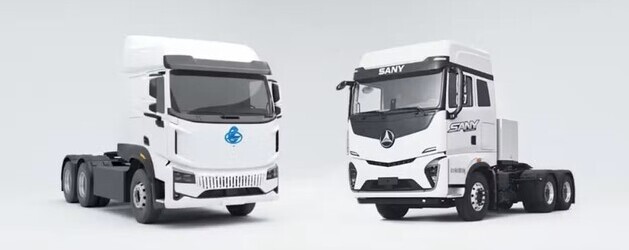
📌 Pony.ai has unveiled its fourth-generation autonomous truck line, delivering a 70% reduction in BOM cost and targeting mass deployment of BEV-based freight trucks in 2026.
-
Pony.ai introduced its Gen-4 autonomous truck system, jointly developed with Sany Truck and Dongfeng Liuzhou Motor, following its recent Gen-7 robotaxi rollout.
-
The new system reduces per-vehicle BOM cost by about 70% by using 100% automotive-grade components and reusing modules from its latest robotaxi platform.
-
Gen-4 trucks are designed for a service life of up to 20,000 hours and can support up to 1 million kilometers of freight operation.
-
The first two models will use BEV platforms engineered for mass production at the thousand-unit scale, with initial deployment planned for 2026.
-
Pony.ai expects its “1+4” platooning model—one human-driven lead truck with four autonomous followers—to cut freight cost per kilometer by 29% and raise profit margins by 195%.
-
The solution is projected to reduce carbon emissions by roughly 60 tons per truck annually.
-
Since entering the truck market in 2018, Pony.ai has grown its freight fleet to about 200 trucks, accumulating over 1 billion ton-kilometers of operations.
-
The company also continues scaling its robotaxi business, operating more than 720 vehicles and targeting a fleet size of 1,000 by year-end.

BMW’s China-built iX3 to feature Momenta’s ADAS solution
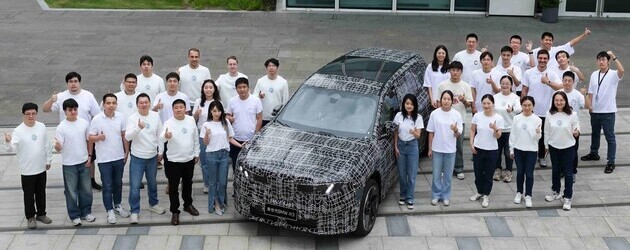
📌 BMW will launch its China-made iX3 in 2026 with a new Momenta-developed ADAS system that uses an end-to-end foundation model for full-scenario navigation in Chinese driving environments.
-
BMW’s China-built Neue Klasse iX3 will be the first model to feature an ADAS system jointly developed with Momenta, launching in early 2026.
-
The partnership, formalized in July, focuses on delivering full-scenario navigation assistance optimized for Chinese urban and highway environments.
-
Joint R&D teams are conducting large-scale road testing in Beijing, Shanghai, Shenyang, and Nanjing under BMW’s global validation standards.
-
Testing includes heavy-traffic conditions, challenging edge cases, and hundreds of millions of kilometers of simulation to verify stability and reliability.
-
The system leverages Momenta’s end-to-end Flywheel Foundation Model with a unified perception–planning–control architecture.
-
Large-scale neural networks enable advanced environment sensing, path planning, and high-precision vehicle control.
-
BMW’s safety philosophy and driver-centric behavior models are integrated to improve human-like decision-making in complex scenarios.
-
The ADAS solution will expand beyond the iX3 to additional BMW models as deployment scales within the Chinese market.

Global LiDAR Market Size and Forecast 2025–2033
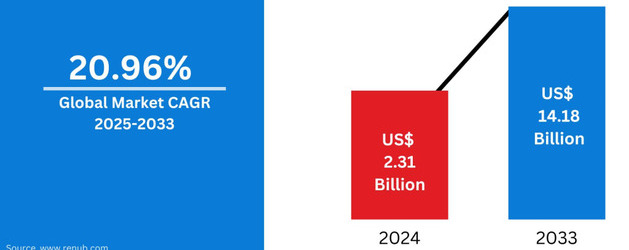
📌 The global LiDAR market is set for rapid expansion through 2033 as autonomous vehicles, urbanization, and 3D geospatial applications drive demand across automotive, smart cities, agriculture, and infrastructure.
-
Renub Research projects the global LiDAR market to grow from USD 2.31 billion in 2024 to USD 12.81 billion by 2033, representing a strong 20.96% CAGR.
-
Demand is rising sharply due to autonomous vehicles, rapid urbanization, precision agriculture, and increased infrastructure and environmental monitoring needs.
-
LiDAR’s ability to generate accurate 3D models in low light, fog, or dense environments supports applications across AV navigation, smart city design, GIS, forestry, construction, and agriculture.
-
High-cost optics, complex system integration, and calibration requirements remain key barriers to wider LiDAR adoption, especially for cost-sensitive sectors.
-
Market trends highlight rapid growth in terrestrial LiDAR, corridor mapping, and 3D LiDAR systems as industries seek higher-resolution and deeper geospatial insight.
-
Short-range LiDAR is expanding fastest due to use in consumer electronics, robotics, drones, and automotive safety systems.
-
The U.S., U.K., India, and the UAE are emerging as high-growth LiDAR regions supported by smart city projects, AV testing zones, and digital infrastructure initiatives.
-
Leading companies such as Innoviz, Teledyne, Hexagon, Sick, and Faro continue to advance cost reduction, sensor accuracy, and AV-ready LiDAR platforms.
* Contents above are the opinion of ChatGPT, not an individual nor company
How Red Bull athlete Matt Jones jumped through autonomous trucks on his mountain bike