

Vol. 262 | 2025.12.23
| Category | Company | Article |
|---|---|---|
| Autonomous Driving | Vueron | Vueron Technology’s ‘VueOne’ Achieves A-SPICE Level 2 Certification for Automotive Software Quality |
| LiDAR Sensor | Rivian | Rivian Will Add Lidar in 2026, Says Tesla’s Cameras Aren’t Enough |
| Autonomous Trucking | Kodiak | Kodiak AI and Verizon Business transform trucking with autonomous tech |
| Autonomous Driving | BYD | BYD ups the ante on L3 autonomous cars, begins testing models for mass production |
| LiDAR Sensor | Innoviz | Innoviz Technologies at CES 2026: Showcasing the Future of Autonomous Mobility with Advanced LiDAR Solutions |

Vueron Technology’s ‘VueOne’ Achieves A-SPICE Level 2 Certification for Automotive Software Quality
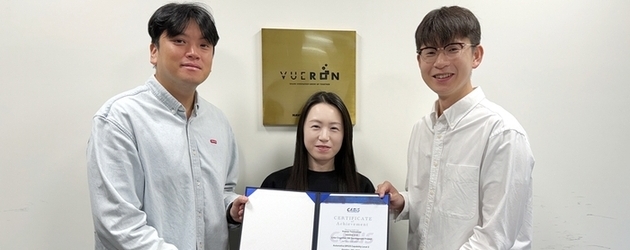
📌 Vueron Technology has secured Automotive SPICE CL2 certification for its ADAS LiDAR perception software VueOne, marking readiness for global OEM mass production programs.
-
Vueron Technology obtained Automotive SPICE (ASPICE) Capability Level 2 certification for its ADAS LiDAR perception solution, VueOne.
-
ASPICE CL2 validates that VueOne meets global OEM requirements for systematic software development, verification, and quality management.
-
The certification confirms that VueOne is ready for mass production programs, beyond technical validation or pilot projects.
-
Vueron advanced from ASPICE CL1 to CL2 in seven months, a rare achievement for a startup in the automotive software industry.
-
With CL2 certification, Vueron has entered active discussions with global OEMs and Tier 1 suppliers for series production applications.
-
The company is shifting from technical evaluations to concrete mass production and vehicle supply projects.
-
Vueron plans to showcase mass production collaboration cases and its production support platform, VueX, at CES 2026 in Las Vegas.

Rivian Will Add Lidar in 2026, Says Tesla’s Cameras Aren’t Enough

📌 Rivian announced it will adopt LiDAR alongside cameras, radar, and in-house silicon for its next-generation hands-free driving systems, directly challenging the camera-only autonomy approach.
-
Rivian unveiled its in-house 5nm Rivian Autonomy Processor (RAP1), replacing NVIDIA chips and forming the core of its next-generation autonomy stack.
-
The RAP1 chip integrates processing and memory in a single module and pairs with the Gen 3 Autonomy Computer (ACM3), following ACM2 launched in 2025.
-
Rivian confirmed the adoption of LiDAR hardware, arguing that camera-only systems degrade in low-light, fog, and adverse weather conditions.
-
LiDAR will debut on the R2 model at the end of 2026, with future expansion to other vehicle lines under evaluation.
-
The Universal Hands-Free (UHF) driver-assist system will evolve with LiDAR-enabled 3D spatial sensing and redundant perception for edge-case scenarios.
-
Rivian highlighted that active sensors like LiDAR can significantly extend nighttime visibility and improve distance estimation beyond camera-only setups.
-
Industry analysts note that multi-sensor fusion—combining cameras, LiDAR, radar, and precise positioning—provides a more robust and safer autonomous driving architecture than vision-only approaches.

Kodiak AI and Verizon Business transform trucking with autonomous tech

📌 Kodiak AI and Verizon have signed a commercial agreement to power always-connected autonomous trucking, positioning 5G IoT connectivity as a core enabler of scalable Physical AI operations.
-
Kodiak AI and Verizon Business reached a commercial agreement to integrate 5G, LTE, and IoT data capabilities into Kodiak’s driverless trucking operations.
-
Verizon provides ultra-reliable, low-latency connectivity and ThingSpace IoT management to support Kodiak’s 24/7 autonomous driver-as-a-service model.
-
The partnership enables mission-critical communication between autonomous trucks and command centers, including over-the-air software updates and remote fleet management.
-
Kodiak’s “Assisted Autonomy” allows human operators to provide remote support in defined scenarios, using real-time camera and sensor telemetry over Verizon’s network.
-
Remote driving support is enabled through Verizon partner Vay Technology, supporting safe intervention in low-speed or complex situations.
-
ThingSpace provides centralized lifecycle management, data usage visibility, and cost transparency across Kodiak’s autonomous fleet.
-
The collaboration supports long-haul, industrial, and defense trucking operations, enabling day-and-night autonomous hauling at scale.
-
The deal highlights how deterministic connectivity infrastructure is becoming as critical as vehicle AI in commercial autonomy deployments.

BYD ups the ante on L3 autonomous cars, begins testing models for mass production
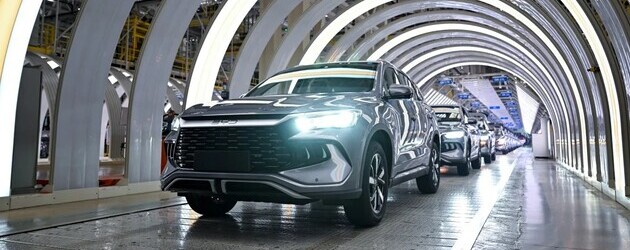
📌 BYD is accelerating L3 autonomous driving development and testing in China, aiming to use hands-off ADAS features to defend and grow sales as regulations begin to ease.
-
BYD confirmed it has completed more than 150,000 km of real-world Level 3 autonomous driving tests in collaboration with local authorities in Shenzhen.
-
The move follows China’s initial regulatory easing, as the Ministry of Industry and Information Technology approved the country’s first L3-capable vehicles for limited deployment.
-
Level 3 systems allow hands-off driving under defined conditions, while still requiring drivers to remain alert and ready to intervene, under SAE International definitions.
-
BYD is positioning preliminary self-driving and ADAS features as a key sales lever in mainland China, the world’s largest EV market.
-
The company has explored offering ADAS-equipped vehicles priced below RMB 100,000, significantly undercutting typical ADAS-equipped models priced above RMB 150,000.
-
Regulatory scrutiny increased in 2025 after a fatal accident involving early-stage autonomous systems, prompting tighter controls on testing and marketing claims.
-
Despite near-term regulatory caution, analysts expect intensified competition in L3 self-driving as approvals expand and OEMs race to gain market share.
-
Industry suppliers, including LiDAR makers such as Hesai Group, indicate China’s automotive ecosystem is preparing for broader adoption of next-generation autonomous driving features.

Innoviz Technologies at CES 2026: Showcasing the Future of Autonomous Mobility with Advanced LiDAR Solutions

📌 Innoviz Technologies will showcase its next-generation InnovizThree LiDAR alongside the InnovizTwo platform and InnovizSMART at CES 2026, highlighting windshield-integrated automotive sensing and smart application solutions.
-
Innoviz Technologies will present live demonstrations of its LiDAR portfolio at CES 2026, held January 6–9 in Las Vegas.
-
The company will debut InnovizThree, a next-generation LiDAR designed for behind-the-windshield integration to support seamless vehicle design and automotive-grade performance.
-
InnovizTwo will be demonstrated in both short-to-mid-range configurations for complex urban driving and long-range configurations optimized for highway autonomy.
-
The long-range InnovizTwo demo includes a blockage mitigation solution to maintain performance when lenses are obscured by dirt, insects, or rain.
-
InnovizSMART targets smart and industrial applications and integrates with NVIDIA Jetson Orin for real-time edge AI processing.
-
The CES showcase follows recent partnerships with Daimler Truck and Torc Robotics, reinforcing Innoviz’s Tier-1 positioning.
-
Innoviz will also offer pre-scheduled test drives and executive briefings to outline its roadmap across automotive and SMART applications.
* Contents above are the opinion of ChatGPT, not an individual nor company
Porsche Christmas Song | The Ultimate Christmas Gift