

Vol. 269 | 2026.02.10
| Category | Company | Article |
|---|---|---|
| ADAS | dSPACE, MathWorks | dSPACE & MathWorks expand partnership to speed up autonomous driving simulation |
| Self-driving | Waymo | Google Is Using The Genie 3 World Model To Simulate Edge Cases To Train Waymo’s Self-Driving Cars |
| LiDAR Sensor | Honda, Mercedes-Benz | Honda and Mercedes-Benz declare war on potholes – new LiDAR and suspension tricks aim to soften the blow of government failures |
| LiDAR Sensor | Hesai, Grab | Hesai Announces Partnership to Accelerate Lidar Development |
| Autonomous Trucking | Tranton, Plus AI | TRATON Deepens Autonomous Trucking Push With Expanded PlusAI Partnership |

dSPACE & MathWorks expand partnership to speed up autonomous driving simulation
📌dSPACE and MathWorks integrated RoadRunner and ASM OpenX to streamline ADAS and autonomous driving simulation through open standards–based workflows.
-
dSPACE and MathWorks expanded their long-standing partnership to improve autonomous vehicle traffic simulation efficiency.
-
Road networks and scenarios created in MathWorks’ RoadRunner now run directly in dSPACE’s ASM OpenX environment.
-
The integration removes file conversion and manual rework between road modeling and traffic simulation tools.
-
Both platforms align on open standards, including OpenDRIVE and OpenSCENARIO.
-
Engineers can reduce errors and shorten development cycles for ADAS and automated driving functions.
-
The unified workflow supports faster iteration of complex traffic scenarios and validation processes.
-
The collaboration highlights growing industry reliance on open, interoperable simulation toolchains.

Google Is Using The Genie 3 World Model To Simulate Edge Cases To Train Waymo’s Self-Driving Cars
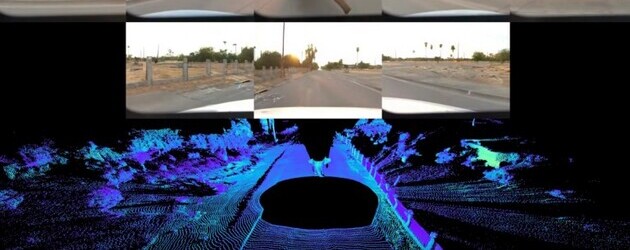
📌 Waymo is using a Genie 3–based world model to simulate rare edge cases across camera and LiDAR modalities, accelerating safety validation for autonomous driving.
-
Waymo introduced the Waymo World Model, a specialized adaptation of Google DeepMind’s Genie 3 world model for autonomous driving simulation.
-
The model generates rare and extreme edge cases, including natural disasters, wrong-way drivers, and abnormal road users, that are impractical or unsafe to capture in real-world testing.
-
Waymo combines nearly 200 million autonomous miles on public roads with billions of miles driven in virtual simulation environments.
-
The system supports multimodal simulation across both camera and LiDAR sensors, extending beyond purely visual world models.
-
Engineers can control simulations through driving-action counterfactuals, scene layout configuration, and natural language prompts.
-
Genie 3’s pretrained world knowledge transfers to Waymo-specific 3D LiDAR outputs, enabling realistic physics and behavior in unseen scenarios.
-
Waymo developed a more efficient variant of the model to support long-duration simulations at reduced computational cost.
-
The approach highlights how large-scale generative world models are becoming central to autonomous driving safety validation and scaling.

Honda and Mercedes-Benz declare war on potholes – new LiDAR and suspension tricks aim to soften the blow of government failures

📌 Honda demonstrated how existing vehicle camera and LiDAR sensors can automate road condition monitoring, significantly improving infrastructure maintenance efficiency.
-
Honda completed a pothole-detection pilot with DriveOhio and the Ohio Department of Transportation using production-grade camera and LiDAR sensors.
-
Honda test vehicles monitored approximately 3,000 miles of public roads, detecting potholes, damaged signs, guardrails, and insufficient road markings.
-
The system processed vehicle-generated data with Edge AI models and analyzed it through Honda’s cloud platform.
-
Road condition insights integrated into Parsons’ iNET Asset Guardian system to support automated infrastructure maintenance workflows.
-
The pilot achieved 99% accuracy for damaged or obstructed signs, 93% for guardrails, and 89% average accuracy for pothole detection.
-
Honda and DriveOhio estimate the approach could save over $4.5 million annually by reducing manual inspections and enabling proactive repairs.
-
The project highlights how vehicle perception data can extend beyond driving to support large-scale public infrastructure management.
-
By contrast, Mercedes-Benz applies road-surface detection primarily to vehicle comfort through adaptive suspension and Car-to-X data sharing.

Hesai Announces Partnership to Accelerate Lidar Development

📌 Hesai appointed Grab as its exclusive distributor in Southeast Asia to accelerate large-scale LiDAR adoption across robotics, autonomous systems, and mapping.
-
Hesai Technology named Grab as its exclusive distributor for LiDAR products across Southeast Asia.
-
Grab will consolidate sales, customer support, and marketing for Hesai’s LiDAR portfolio throughout the region.
-
The partnership targets faster LiDAR deployment for robotics, autonomous systems, and high-definition mapping applications.
-
Hesai will leverage Grab’s established regional distribution network to lower adoption barriers and improve sensor accessibility.
-
Grab secures a stable supply of LiDAR hardware to support its autonomous mobility and mapping initiatives.
-
Hesai cited strong regional demand for LiDAR across manufacturing, logistics, and service robotics.
-
The collaboration aims to advance Physical and Embodied AI by enabling machines to operate safely in dense, complex urban environments.
-
The deal reflects Southeast Asia’s transition from LiDAR validation to large-scale commercial deployment.

TRATON Deepens Autonomous Trucking Push With Expanded PlusAI Partnership
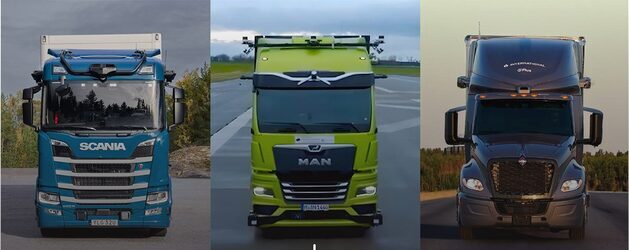
📌 PlusAI and the TRATON Group expanded their partnership to accelerate factory-integrated Level 4 autonomous trucking across the U.S. and Europe.
-
PlusAI and TRATON Group expanded their global partnership to advance on-highway autonomous truck commercialization.
-
TRATON will provide up to $25 million in non-dilutive R&D funding to support factory integration of PlusAI’s SuperDrive autonomous driving software.
-
The funding targets development, validation, and industrialization of autonomous truck platforms for series production.
-
The agreement includes board representation for TRATON following PlusAI’s planned public listing via Churchill Capital Corp IX.
-
TRATON is eligible for milestone-based warrants linked to early autonomous deployment revenue, aligning incentives around commercialization.
-
SuperDrive is positioned as the autonomous platform across multiple TRATON brands, including Scania, MAN, and International.
-
The partners have already completed fleet trials in Texas, driverless safety maneuver validation, and NVIDIA-based development integration.
-
The collaboration underscores closer OEM–software alignment as autonomous trucking moves toward factory-built deployment at scale.
* Contents above are the opinion of ChatGPT, not an individual nor company
Rivian’s AI Master Plan: Hands-Free Driving, R2 + LiDAR, and the Road to Personal Level 4 Autonomy