

Vol. 270 | 2026.02.17
| Category | Company | Article |
|---|---|---|
| LiDAR Sensor | Ouster | Lidar-maker Ouster buys vision company StereoLabs as sensor consolidation continues |
| LiDAR Sensor | Waymo | Beginning fully autonomous operations with the 6th-generation Waymo Driver |
| Autonomous Driving | Pony.ai , Toyota | Pony.ai and Toyota Launch Mass Production of 7th-Generation Robotaxi in China |
| Autonomous Trucking | Aurora | Aurora CEO: 200+ Driverless Trucks Planned as Sun Belt Expansion Accelerates |
| ADAS | BYD | Self-driving trucks for safer, nonstop mining: China’s BYD backs Boonray’s Level 4 autonomy |

Lidar-maker Ouster buys vision company StereoLabs as sensor consolidation continues
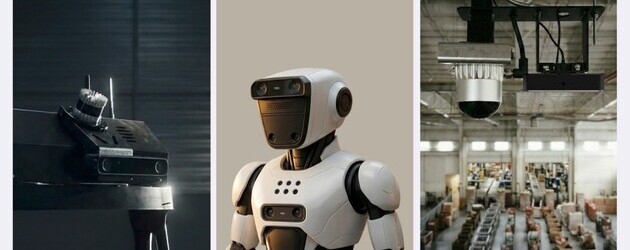
📌Ouster acquired StereoLabs to integrate vision-based perception with lidar and expand into a unified sensing platform for robotics and industrial automation.
-
Ouster acquired StereoLabs for $35 million in cash and 1.8 million shares to strengthen its perception capabilities.
-
StereoLabs develops stereo camera-based 3D vision systems for robotics, industrial automation, and intelligent infrastructure applications.
-
The acquisition enables Ouster to combine lidar and vision into a unified sensing and perception stack.
-
Ouster positions lidar as the core sensor for safety-critical systems while expanding into complementary camera-based depth perception.
-
StereoLabs has developed AI-based depth estimation from stereo cameras, enhancing perception performance at the edge.
-
The deal reflects broader consolidation across the perception sensor market as companies seek scale and integrated solutions.
-
Ouster previously merged with Velodyne and acquired Sense Photonics, signaling an ongoing strategy to move up the perception stack.
-
The acquisition aligns with growing demand for integrated sensing platforms across robotics, autonomous systems, and industrial automation.
.

Beginning fully autonomous operations with the 6th-generation Waymo Driver
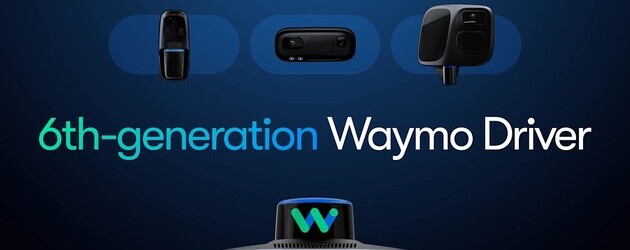
📌 Waymo launched fully autonomous operations with its 6th-generation Driver, combining cost-optimized multi-modal sensing and custom silicon to enable scalable deployment across multiple vehicle platforms.
-
Waymo began fully autonomous operations with its 6th-generation Waymo Driver, positioning it as the foundation for large-scale expansion into more cities and diverse environments.
-
The system builds on nearly 200 million fully autonomous miles driven across 10+ major cities and freeway networks, strengthening long-tail scenario performance and safety validation.
-
Waymo deploys a custom multi-modal sensing suite that integrates high-resolution cameras, imaging radar, lidar, and external audio receivers into a unified perception architecture.
-
The next-generation 17-megapixel camera system delivers higher resolution and dynamic range while reducing the total number of cameras and lowering hardware costs.
-
The 6th-generation lidar improves long-range detection, weather robustness, and centimeter-level accuracy, leveraging industry-wide cost reductions and in-house optical and chip design.
-
Imaging radar enhances object tracking across lighting and severe weather conditions, strengthening sensor fusion performance in rain, snow, and low-visibility scenarios.
-
Waymo shifted greater processing complexity into custom silicon, increasing efficiency and reducing system hardware complexity compared with previous generations.
-
The platform supports multiple vehicle integrations, including Hyundai IONIQ 5, and enables factory-scale production capacity targeting tens of thousands of units per year.

Pony.ai and Toyota Launch Mass Production of 7th-Generation Robotaxi in China
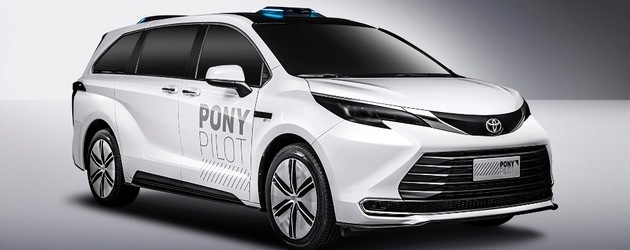
📌 Pony.ai and Toyota began mass production of the bZ4X-based Platinum 4X Robotaxi, marking a shift from pilot programs to large-scale commercialization in China’s autonomous mobility market.
-
Pony.ai and Toyota Motor China launched mass production of the seventh-generation Platinum 4X Robotaxi built on Toyota’s bZ4X electric SUV platform.
-
Production takes place at GAC Toyota facilities under Toyota Production System (TPS) standards with a dedicated quality management framework for autonomous vehicles.
-
The vehicle integrates Pony.ai’s Gen-7 autonomous driving system, designed to handle dense urban traffic conditions in China’s complex city environments.
-
The partnership evolved from testing and pilot programs since 2019 to full-scale industrial production supported by a joint venture for vehicle development and operations.
-
Pony.ai plans to deploy thousands of Platinum 4X Robotaxis across major Chinese cities in 2026, signaling accelerated commercial rollout.
-
Large-scale production targets cost reduction and operational efficiency as China intensifies competition in the robotaxi market.
-
The collaboration reflects deeper integration between legacy automakers and autonomous technology firms, aligning hardware manufacturing and AI software development from the production stage.
-
The program positions 2026 as a potential inflection point for robotaxi commercialization in China and globally.

Aurora CEO: 200+ Driverless Trucks Planned as Sun Belt Expansion Accelerates
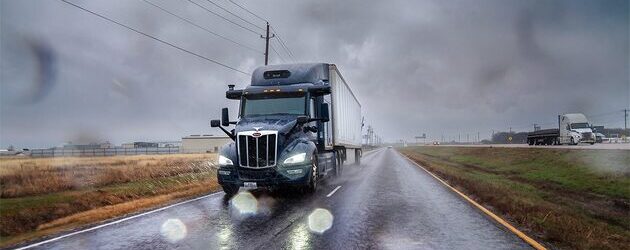
📌 Aurora expanded its driverless freight network to 10 routes and outlined production ramp plans toward 200+ autonomous trucks, signaling a shift from early deployment to scaled commercial operations.
-
Aurora Innovation expanded its driverless freight network to 10 routes, tripling its operational footprint across key U.S. freight corridors.
-
The company prioritized expansion across the U.S. Sun Belt as part of its phased commercialization strategy for the Aurora Driver long-haul autonomous system.
-
Aurora signed a commercial agreement with Detmar Logistics to support continued customer and network growth beyond early pilot deployments.
-
CEO Chris Urmson expects more than 200 driverless trucks to operate by the end of 2026, supported by a production target of 20 trucks per week later in the year.
-
Aurora projects $14–$16 million in 2026 revenue and estimates its autonomous trucks will operate approximately 20 hours per day, highlighting a utilization advantage over traditional driver-hour limits.
-
The company is working with Roush on vehicle production and with Aumovio on its third-generation commercial hardware kit designed to support tens of thousands of trucks.
-
Aurora emphasized safety validation, infrastructure readiness, and customer demand as core criteria for route expansion and geographic scaling.
-
The combination of route density, fleet growth, and production ramp signals Aurora’s transition toward scaled commercial deployment in autonomous freight.

Self-driving trucks for safer, nonstop mining: China’s BYD backs Boonray’s Level 4 autonomy
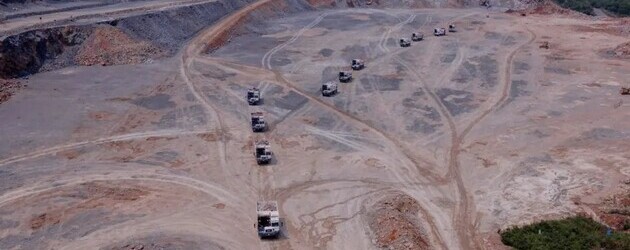
📌 BYD invested $14.5 million in Boonray to accelerate deployment of Level 4 autonomous, battery-swapping electric mining trucks already operating across 30 mining projects in China.
-
BYD invested $14.5 million in Boonray to advance autonomous, battery-swapping electric mining truck development.
-
Boonray integrates Level 4 autonomous driving technology with vehicle-by-wire controls and AI-powered algorithms for next-generation mining operations.
-
The system combines onboard sensors with fixed infrastructure such as beacons and reference points to enable fully unmanned driving and automated battery swapping.
-
Boonray’s autonomous solutions currently operate across 30 mining projects in China under diverse ore types and harsh industrial conditions.
-
A fleet of 160 BLEB145A1 autonomous trucks completed 200 battery swaps in a single day at a coal mine in Xinjiang, demonstrating high operational utilization.
-
The partnership strengthens collaboration in R&D, supply chain optimization, and scenario-specific product development for industrial mining applications.
-
China’s electrified heavy-duty truck sales reached 45,300 units in 2025, accounting for 54% of the total heavy truck market, signaling rapid industrial adoption of electric and autonomous systems.
-
The investment reflects growing integration between electrification and automation in heavy industry, positioning mining as an early large-scale deployment sector for autonomous vehicles.
* Contents above are the opinion of ChatGPT, not an individual nor company
How Nvidia’s Alpamayo Could Make Self-Driving Cars Think Like Humans