Hello, subscriber. This is Vueron Letter, delivering the latest news to you.
The market fluctuated significantly this week, driven by two major trends:
the democratization of Level 4 autonomous driving and the expansion of edge infrastructure. We highlight key headlines that industry experts canno
afford to miss, covering the evolution of software chipset leaders,
global platforms fighting for data acquisition.
Check out this week's detailed news below! |
✅ Nvidia Launches 'Alpamayo 2' AI Model to Fast-Track Level 4 Autonomous Driving ✅ Waymo Launches New 'Ojai' Robotaxi Public Rides Across US ✅ Uber to deploy 500 data-collection vehicles this year ✅ BYD Takes Liability for Self-Driving Crashes, Outpacing Tesla |
📰 Nvidia Launches 'Alpamayo 2' AI Model to Fast-Track Level 4 Autonomous Driving |
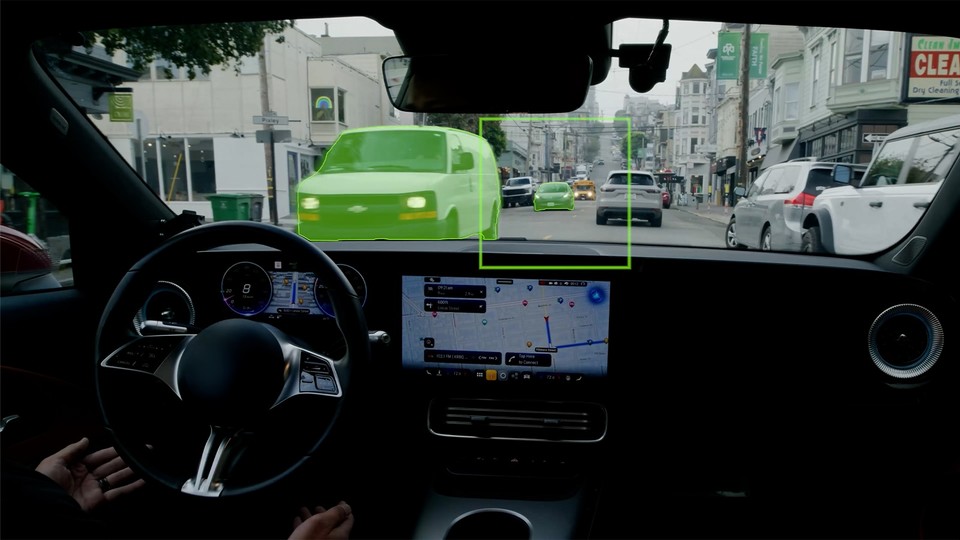
At GTC Taipei, Nvidia unveiled "Alpamayo 2 Super," a next-generation 32-billion-parameter inference AI model designed for Level 4 autonomous driving and robotaxis. The model features "Meta Action" capabilities for 360-degree situational awareness and high-level driving decisions, while providing an explainable reasoning framework for its actions.
Nvidia also introduced "AlpaGym," a closed-loop simulation training platform, and "OmniDreams," a platform that generates rare, synthetic accident scenarios. Together,
these tools enhance the system's ability to handle the "long-tail" edge cases that challenge autonomous vehicle commercialization. |
📰 Waymo Launches New 'Ojai' Robotaxi Public Rides Across US |
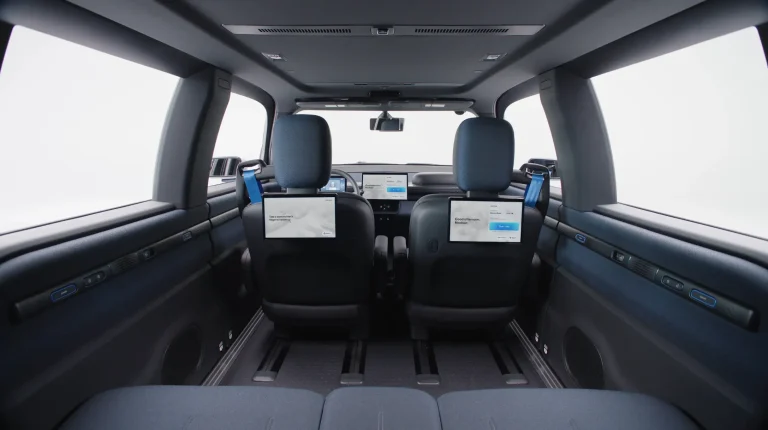
Waymo has announced that it will launch public commercial rides within weeks for its next-generation "Ojai" robotaxi in Los Angeles, San Francisco, and Phoenix. The Ojai is the first vehicle to feature the 6th-generation Waymo Driver autonomous system. It maximizes passenger convenience with elevator-style doors, a low step-in height, a completely flat floor, and three large, customizable internal LED screens. Designed as a passenger-centric mobility platform, the vehicle heavily integrates accessibility features for the transportation vulnerable, including braille markings, screen-reader compatibility, and seat-integrated grab handles. |
📰 Uber to deploy 500 data-collection vehicles this year |
Uber has introduced a modified Hyundai Ioniq 5 prototype designed to collect real-world driving data for autonomous partners like Waymo, Avride, and WeRide. Through its new "AV Labs" division, Uber plans to deploy 500 of these electric vehicles globally this year, targeting 2 million miles of high-fidelity data per month for robotaxi training. Developed with Roush Performance, the vehicle features 14 cameras, 8 solid-state LiDAR sensors, and 9 radars, with all data processed via Nvidia’s "Drive Thor" computer. Uber aims to build the world's most geographically diverse, 360-degree synchronized dataset optimized for training autonomous software. |
📰 BYD Takes Liability for Self-Driving Crashes, Outpacing Tesla |
BYD has announced a groundbreaking policy in China, assuming full financial liability for at-fault accidents that occur while its "God's Eye" urban driving system is active. With no payout cap, BYD will cover vehicle repairs, property damage, and personal injury during the first year of ownership. This directly contrasts with Tesla's "Full Self-Driving," which places 100% of the responsibility on the driver. Additionally, BYD’s system is much cheaper, costing around $1,770 compared to Tesla’s $9,400 package in China. Although the program is limited to China, BYD is using this strategy to build consumer trust and aggressively gather driving data. |
How did you like this newsletter?
Take a quick survey and help us bring you even more valuable content next time. |
Your feedback helps make the Vueron Letter even better! |
Vueron | What is Vueron up to these days? Visit our website and blog to learn more. |
Vueron Technology 2150 N First St, Suite 509, San Jose, CA 95131, US |
|
|