Overview
Accurate object perception is
the starting point of every autonomous system.
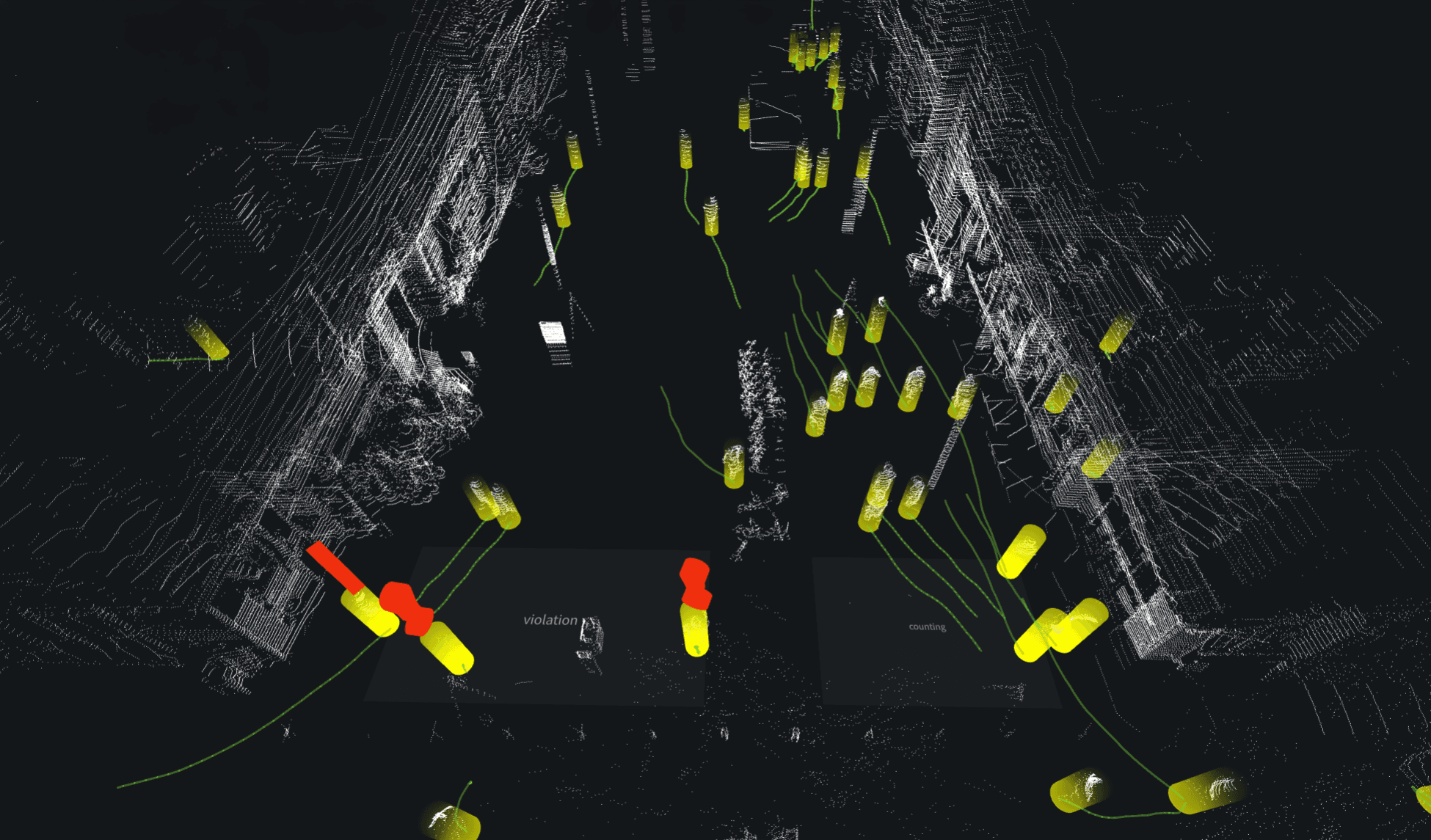
For autonomous systems to operate safely, they must quickly and accurately understand the position and movement of vehicles, pedestrians, obstacles, and surrounding structures. Vueron has designed high-performance Perception AI to maintain consistent perception performance even in complex driving environments.
Key Capabilities
It precisely recognizes everything from long-range targets to small or irregular objects, and processes massive sensor data in real time.
Through multi-sensor fusion, it delivers stable perception performance even in diverse environmental conditions.
Long-range
Object Detection

Small & Unknown
Object Detection
Multi-Sensor
Processing

Multi-Sensor
Fusion

Robust
Perception
Core Technologies
Long-range Object Detection
Precisely recognizes the position and shape of objects even in long-range environments.
Small & Unknown Object Detection
Reliably identifies small and irregular objects.
Multi-SensorProcessing
Processes data from multiple LiDAR sensors in parallel, handling large-scale data with low latency.
Multi-Sensor Fusion
Integrates LiDAR, camera, and radar data to enhance environmental perception accuracy.
Robust Perception
Designed to maintain consistent performance across changes in country, weather, and road conditions.

Applications
It can be applied across diverse environments
that require precise object perception, including ADAS/autonomous vehicles, smart infrastructure, and industrial automation.
Overview
Object perception alone is not enough
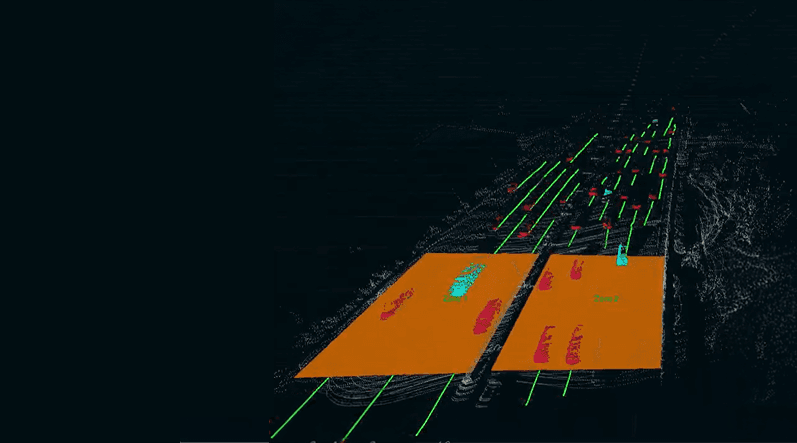
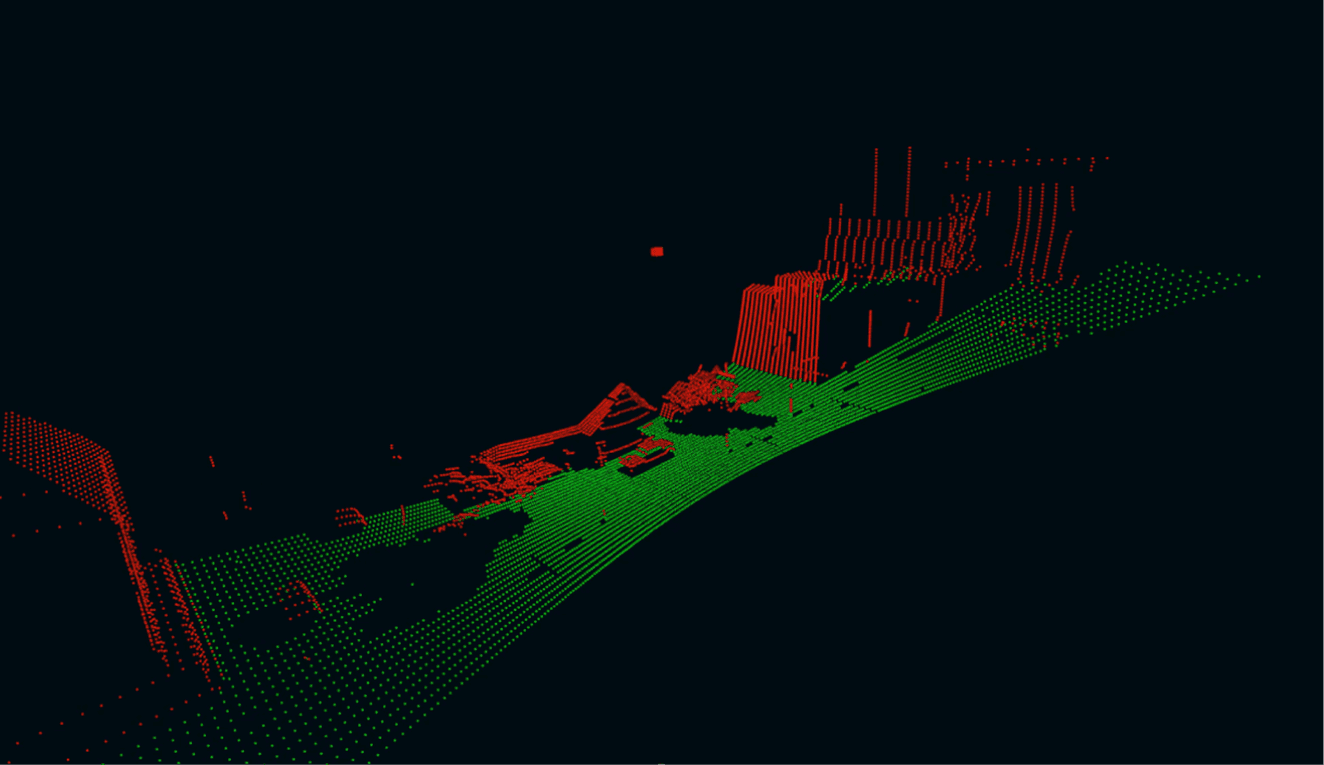
For safe autonomous systems, it is not enough to detect surrounding objects—the structure and condition of the road itself must also be interpreted accurately. Vueron precisely analyzes road surface geometry and structure using LiDAR point clouds.
Key Capabilities
It analyzes elevation, slope, and surface variation, identifies
key road elements such as lanes, curbs, tunnels, and structures,
and reconstructs 3D spatial layouts while estimating position to enable consistent environmental understanding.
Road Surface
Understanding
Road Structure
Detection

3D Spatial
Mapping
Core Technologies
Road Surface Understanding
It separates the ground plane and precisely interprets road surface geometry to estimate drivable space across diverse environments.
Road Structure Detection
It recognizes key elements of the road environment —including lanes, curbs, tunnels, and structures—as 3D spatial information.
3D Spatial Mapping
It reconstructs the 3D spatial structure of the surroundings and estimates location, enabling the system to understand space consistently.
Applications
It is well suited for environments that require an understanding of complex spaces in motion, such as autonomous vehicles, smart road infrastructure, airports, logistics hubs, and large outdoor facilities.
Overview
An era that demands space-level perception
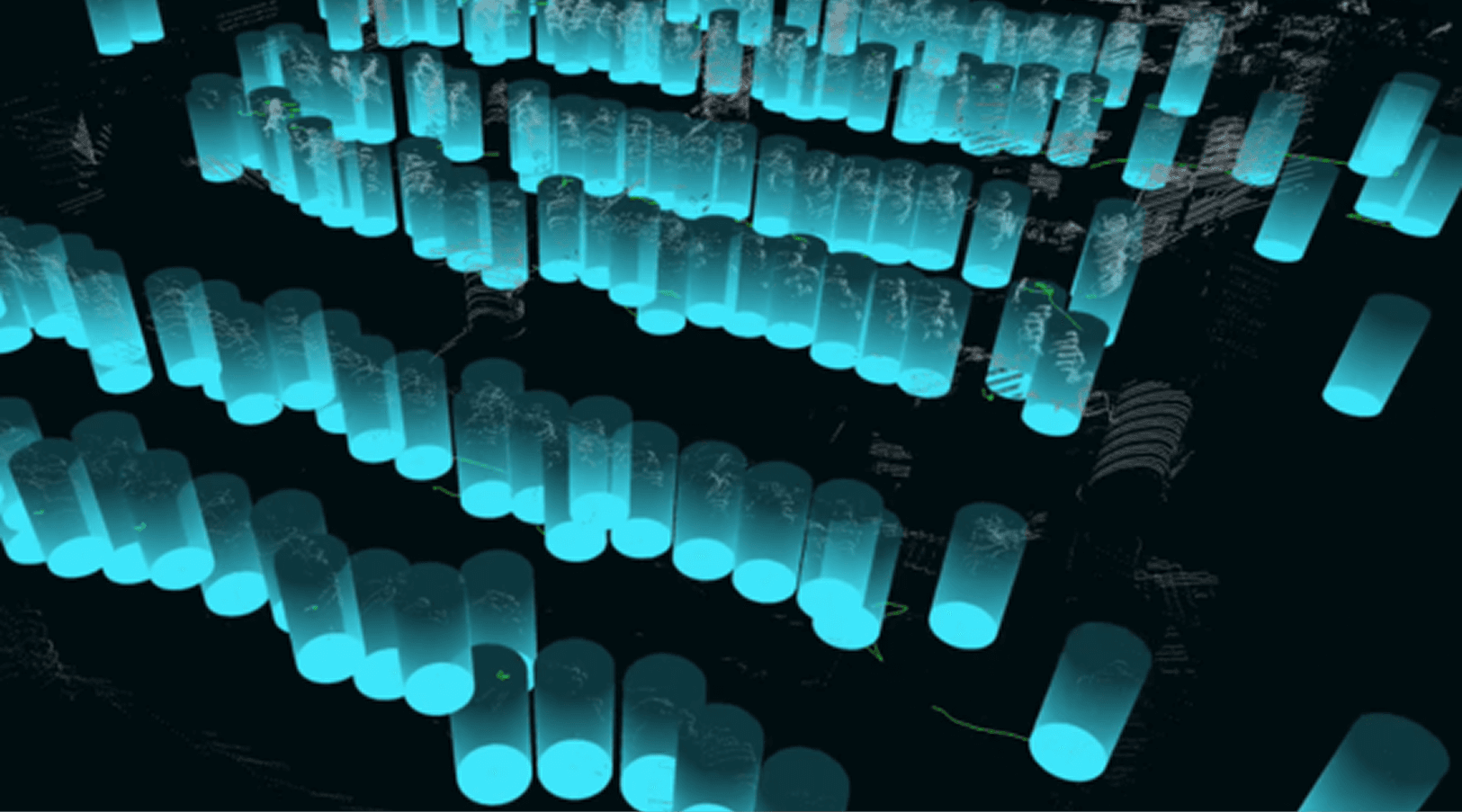
In infrastructure environments such as smart cities, airports, intersections, and highways, it is no longer enough to detect individual objects—the ability to understand the flow of an entire space is essential. Vueron uses long-range LiDAR to precisely perceive and analyze wide areas.
Key Capabilities
It detects vehicles and pedestrians across large spaces, analyzes vehicle movement patterns and traffic flow, estimates pedestrian density and congestion, generates long-term traffic statistics, and detects dangerous situations and abnormal events in real time.
Wide-Area Perception
Traffic Flow Analysis
Crowd Density Estimation

Traffic Statistics Platform
Traffic Event Detection
Core Technologies
Wide-Area Perception
Reliably detects vehicles and pedestrians across ranges of several hundred meters.
Traffic Flow Analysis
Analyzes traffic volume by vehicle type and movement patterns to provide data for operations and policy planning.
Crowd Density Estimation
Calculates congestion levels based on pedestrian locations and movement patterns.
Traffic Statistics Platform
Statistically analyzes traffic volume and space utilization patterns based on long-term data.
Traffic Event Detection
Detects illegal parking, speeding, and hazardous situations in real time and connects them to alerts.
Applications
It is well suited for environments that need to manage movement flow and congestion across wide areas, including smart cities, airports, intersections, highways, large event venues, and public facilities.
Overview
AI in the real world must run at the edge
In real service environments, AI requires not only high performance but also a structure that can operate reliably under limited power and computing resources. Vueron has optimized its LiDAR-based perception algorithms for real vehicle and infrastructure environments.
Key Capabilities
It provides a lightweight AI architecture optimized for large-scale point cloud processing, low-latency real-time inference, hardware-aware optimization for diverse AI chipsets and sensor environments, and a deployment framework for stable on-device operation.
Efficient Perception Architecture

Real-time
Inference
Hardware-Aware Optimization
Edge Deployment Framework
Core Technologies
Efficient Perception Architecture
A lightweight perception architecture designed to operate in embedded environments.
Real-time Inference
Processes large-scale sensor data quickly through an optimized processing pipeline.
Hardware-Aware Optimization
Reliably optimizes algorithms for diverse AI chipsets and LiDAR sensor environments.
Edge Deployment Framework
Provides an execution framework for deploying and operating AI models in vehicle and infrastructure systems.
Applications
It is well suited for environments that need to run AI under limited computing resources, including embedded vehicle systems, smart infrastructure equipment, and field-deployed edge devices.
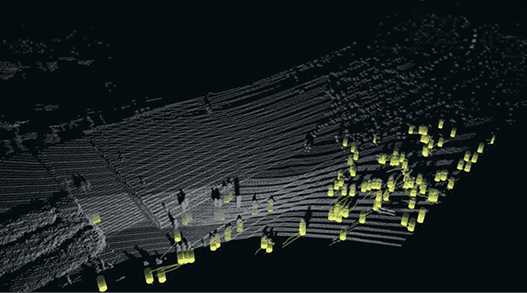
Overview
In autonomous systems,
safety is not a feature—it is the foundation
Autonomous systems require a high level of safety and reliability. To build AI perception systems that operate reliably in real-world environments, Vueron designs not only technical performance but also processes and operational frameworks with safety at the center.
Key Capabilities
It builds safety-critical AI systems through system design aligned with functional safety requirements, software development processes based on automotive industry standards, and system reliability validated in real operating environments.

Functional
Safety Design

Safety-Certified
Development Process

Operational
Reliability
Core Technologies
Functional Safety Design
Perception algorithms and system architectures are designed to meet safety requirements and operate reliably across diverse environments.
Safety-Certified Development Process
A safety-focused development process based on automotive industry standards; Vueron has achieved ASPICE CL2.
Operational Reliability
A framework for continuously securing system reliability and stability through deployment and validation across diverse real-world operating environments.
Applications
It is well suited for environments where safety and operational reliability are critical, including autonomous driving, smart infrastructure, and industrial AI systems.
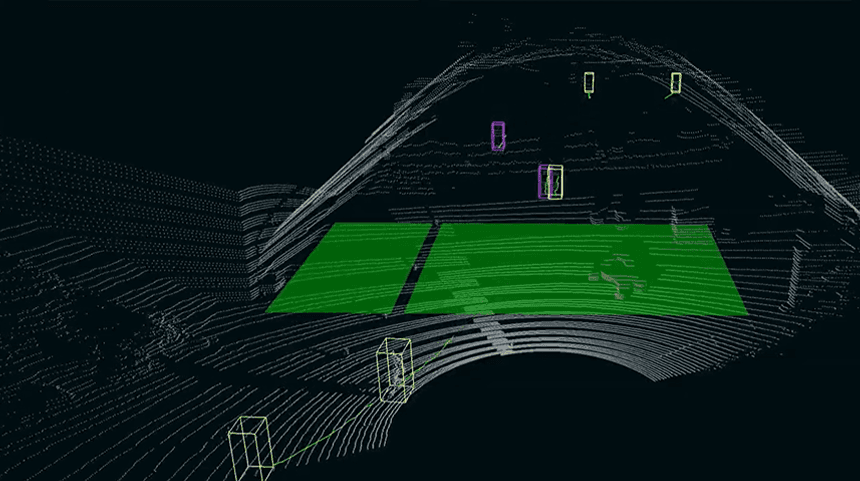
Overview
AI competitiveness starts
with the data operations architecture
In autonomous driving and smart infrastructure environments, large volumes of data must be continuously collected, transformed into trainable formats, and quickly reflected in models. To enable this, Vueron has designed a Perception AI Foundry architecture that connects the entire workflow from data collection to deployment.
Key Capabilities
It collects and manages sensor data from diverse sources, accelerates dataset creation with AI-based automated annotation, and provides dataset optimization along with continuous training and deployment pipelines to improve learning efficiency.

Data
Collection

Automated
Annotation

Dataset
Optimization
Continuous Data Training
& Deployment Pipeline
Core Technologies
Data Collection
Efficiently stores and manages data collected from various sources, including vehicles, infrastructure sensors, and test environments.
Automated Annotation
Uses AI-based auto-labeling to generate object labels and accelerate dataset creation.
Dataset Optimization
Selects and optimizes training data quality to improve model performance.
Continuous Data Training & Deployment Pipeline
Feeds data collected in real operating environments back into training and deployment to continuously improve models.
Applications